If you’re all about custom looks and durable surfaces, concrete countertops might be just what you’re looking for. They’re super versatile, giving you the ability to design a countertop that fits your exact vision. Concrete is a material that’s tough, customizable, and can be shaped to fit any style, making it a favorite choice for modern kitchens, bathrooms, and even outdoor spaces.
But let’s be real, not all concrete countertops are created equal. The quality, design, and price can vary widely, so how do you know if you’re getting the best deal? In this guide, we’ll break down the concrete countertop grading system so you can make an informed decision and choose the best countertop for your needs.
What Are Concrete Countertop Grades?
Before we dive into costs and pricing, let’s first talk about concrete countertop grades. Concrete is one of those materials that’s completely customizable. You can make it look sleek and modern, or you can give it a more rustic, industrial feel. The grading system comes in handy to determine the quality, durability, and appearance of each concrete countertop.
Unlike granite or quartz, concrete countertops are poured and molded on-site, meaning they’re made to your exact specifications. But because of this, each piece can vary quite a bit some are stronger and more refined, while others might be more prone to cracking or wear. The grading system helps make sense of all these variables, so you can know what you’re getting.
Why Concrete Is Graded
Grading concrete countertops is necessary because they’re not mass-produced like other countertops. They’re hand-poured and shaped, which means the final product depends heavily on the materials, process, and craftsmanship. When you grade concrete countertops, factors like strength, aesthetic appeal, and the finish quality all play a role in determining the grade.
Here are the factors that impact the grade of a concrete countertop:
- Strength and Durability (How long your countertop will last, especially in high-traffic areas)
- Visual Consistency (Whether the color and design are uniform or more varied)
- Finish Quality (Whether the surface is smooth, textured, polished, or matte)
- Customization (How unique and tailored the design is)
Basically, the grading system helps you gauge how functional and beautiful your concrete countertop will be in the long run.
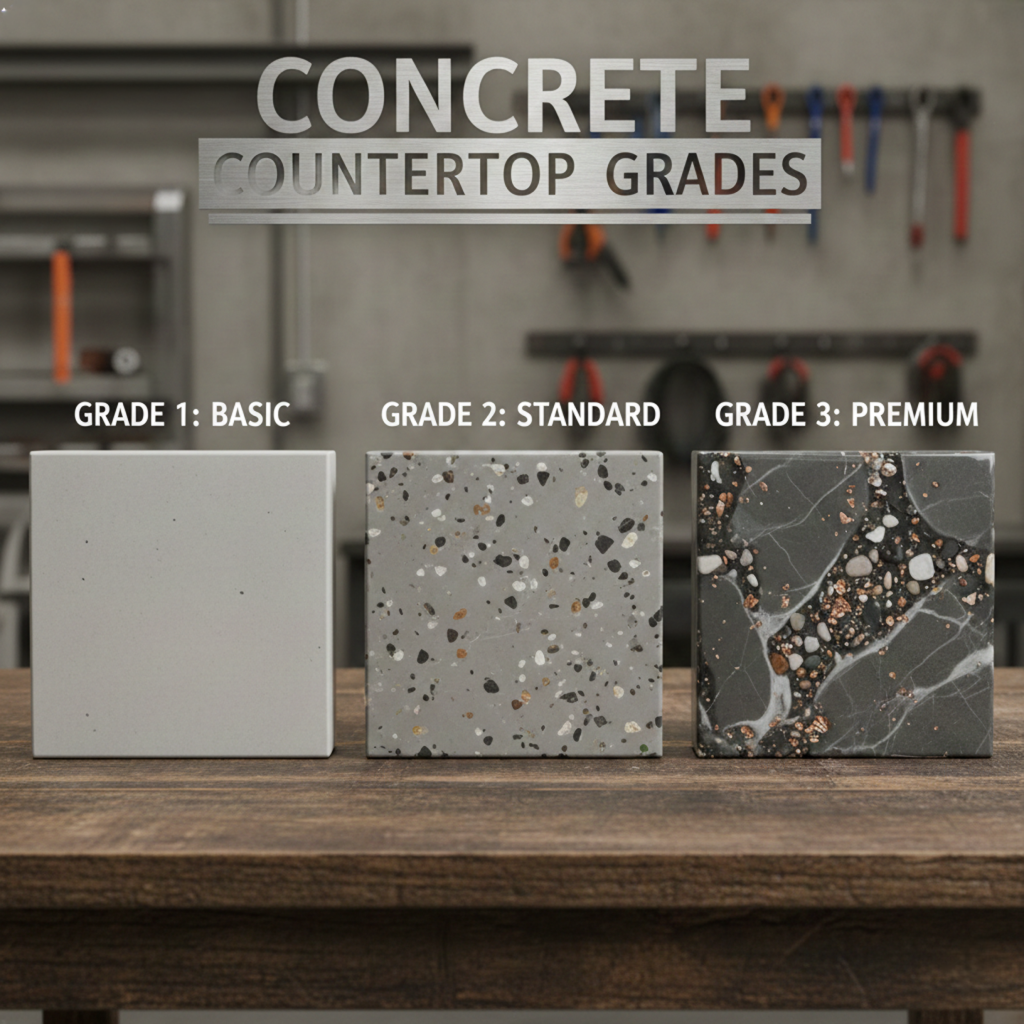
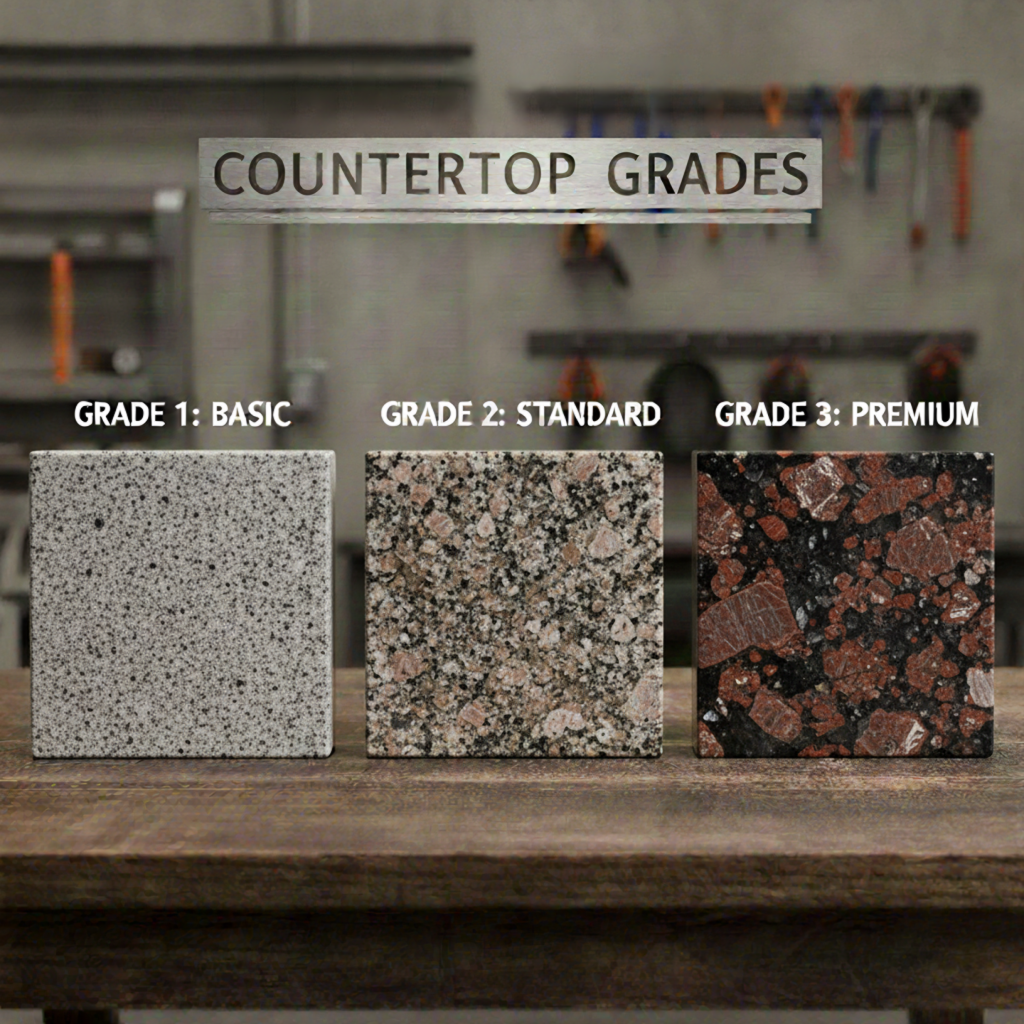
Breakdown of Concrete Grades
Now that we understand the importance of grading, let’s break down what each grade really means. Whether you’re looking for an affordable, DIY-friendly project or a high-end, custom design, knowing the different grades of concrete countertops will help you make the right choice.
Level 1 – Entry-Level / Commercial Grade Concrete
Level 1 concrete countertops are usually the most affordable option. These are perfect for basic renovations or spaces where you don’t want to invest too much. Here’s what you’ll typically find with this grade:
- Thinner slabs (Usually around 2cm thick, which may need reinforcement)
- Simpler finishes, such as matte or rough textures
- Pre-cast concrete made in molds that can have some imperfections
Pros: Budget-friendly, quick to install, and a good option for casual spaces like garages or rental properties.
Cons: Not as unique or polished, and the finish might not be as smooth as higher-end options.
Level 2–3 – Mid-Grade Concrete
Mid-grade concrete countertops offer a better balance between cost and quality. They have a higher level of craftsmanship and a more refined finish than entry-level options. Here’s what you can expect:
- 3cm thickness for better durability and a more substantial look
- Smoother, more polished finishes that give the countertop a more professional look
- Better color consistency, with more customized patterns and designs
Best For: Homeowners looking for a more customized look without spending a fortune. Great for kitchens and high-use bathrooms.
Popular Picks: Concrete with metallic pigments, colored concrete with exposed aggregates, or unique edge treatments.
Level 4–7 – Premium / Custom Concrete
If you’re after something truly one-of-a-kind, this is where the magic happens. Premium concrete countertops are all about customization and high-end finishes. These slabs are made with:
- Thicker slabs (usually 4-5cm thick) for added strength and a luxury feel
- Highly polished or intricate finishes, with smooth surfaces or honed textures
- Exposed aggregate designs that showcase the raw beauty of stone or glass mixed into the concrete
Ideal For: Luxury kitchens, designer bathrooms, or any space where you want the countertop to be the centerpiece.
Factors That Influence Concrete Grade and Cost
There are quite a few factors that can impact the price and grade of your concrete countertop. It’s not just about the looks—though that definitely plays a role. Let’s look at the key elements that influence concrete countertop cost.
Material Quality (Local vs. Imported)
Just like any natural material, concrete countertops can vary in price based on the materials used. High-quality aggregates, like crushed glass or stone, will cost more, while basic concrete may be more affordable. Additionally, some decorative elements, like pigments or decorative aggregates, will add to the price.
Thickness and Reinforcement
Thicker slabs of concrete will cost more. Plus, concrete countertops often require extra reinforcement, especially for thicker slabs. The more reinforcement needed (such as steel rebar or mesh), the higher the cost.
Customization and Design Complexity
The more you customize your concrete countertop, the more you’ll pay. Things like intricate edge designs, custom colors, or exposed aggregate (where stones or glass are revealed in the surface) add a significant cost. If you’re looking for something unique or made-to-order, expect the price to reflect that.
Finish and Surface Texture
Whether you want a smooth, polished surface or something with more texture (like a brushed or honed finish), the time and labor involved will impact the cost. Polished concrete countertops require more work, and that means a higher price tag. Other finishes, like matte or leathered, are more affordable.
Fabrication and Installation
Another thing to consider is the cost of fabrication and installation. Concrete countertops are usually made on-site, which means the installation process can take longer than, say, pre-fabricated granite or quartz. Additionally, fabricating concrete countertops requires skilled professionals, so labor costs can add up.
Related Article: Best Countertop Upgrades During Home Renovations
How Much Should You Pay? Concrete Grade vs. Budget
There’s a concrete countertop for every budget, but how much you should pay depends on how much customization you want, the grade of concrete, and how long you plan to stay in your home. Here’s a quick breakdown:
| Concrete Grade | Average Cost per Sq. Ft. (Installed) | Best For | Long-Term Value |
| Level 1 (Basic) | $50 – $75 | Rentals, budget remodels | Moderate, Affordable, Less Unique |
| Level 2–3 (Mid-Range) | $75 – $125 | Family kitchens, standard remodels | High, Best cost-to-durability ratio |
| Level 4–7 (Premium / Custom) | $150 – $250+ | Luxury kitchens, designer spaces | Exceptional, Becomes a focal point |
When Is Premium Concrete Worth It?
- For Your Forever Home: If you’re planning to stay in your home for a long time, investing in a custom concrete countertop is worth it. It will be durable, beautiful, and totally unique.
- For Selling: If you’re flipping or selling soon, mid-range concrete countertops usually offer the best return on investment.
- For Rentals or Secondary Spaces: Budget-friendly concrete countertops are great for spaces where you don’t want to spend a ton but still want a solid, stylish option.
How to Identify Genuine Concrete Quality When Buying
The cool thing about concrete countertops is that they’re made to order, but that also means you need to be careful about the quality. Here’s how to make sure you’re getting the real deal:
Questions to Ask Your Supplier
Ask your supplier these key questions to get the full picture:
- What grade is this concrete, and why?
- Is this slab reinforced with rebar or steel mesh?
- Can I see samples of the finish and colors?
- What’s the expected lifespan of this concrete countertop?
Simple Physical Tests You Can Perform
You don’t need to be an expert to test the quality of your concrete countertop. Try these simple tests:
- Scratch Test: Real concrete countertops are tough. If your key or coin leaves a mark, it could be a sign of lower-quality concrete.
- Water Absorption Test: Drop a bit of water on the surface. If it soaks in quickly, the concrete may not be sealed well and could be porous.
- Heat Test: Place a hot pot on the countertop. Genuine concrete countertops are heat resistant but check for discoloration if the heat is too much.
Watch Out for Counterfeit Concrete Lookalikes
Some retailers may try to sell you something that looks like concrete but is actually made from engineered stone or other materials. Always check to make sure you’re getting authentic concrete look for irregularities and textures that indicate it’s the real thing.
Conclusion
Choosing the right concrete countertop is about more than just picking the most stylish option it’s about choosing something that fits your needs and budget. Whether you go for an entry-level concrete countertop or splurge on a custom, high-end design, make sure it works for your space. Mid-range concrete countertops often provide the best balance of quality and cost, while premium options will give your home a truly unique, luxury feel. By understanding the grading system, you can make a well-informed decision and invest in a countertop that lasts for years to come.