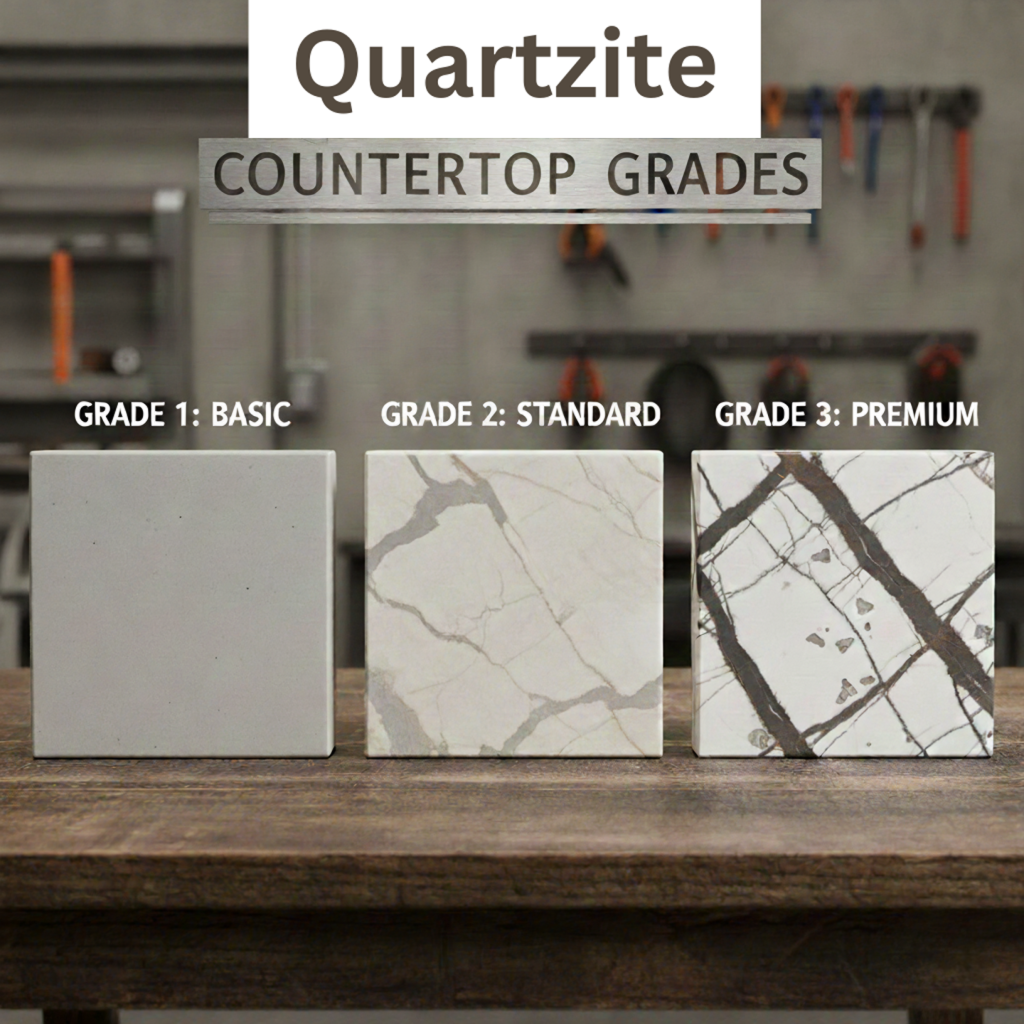
Granite remains one of the most coveted choices for kitchen and bathroom surfaces, and for good reason. It is strong, sleek, and non-hot surface, which introduces a sense of natural luxury that can never be replicated with synthetic material. However, not every granite workstation is created equal. The reason is that there are various grades of granite, each of which reflects the quality, rarity, origin, and finish. Then how would you ever know whether you are getting true quality or a high-fancy gimmick? We will deconstruct the granite grading system and guide you to make the correct choices of the kind of kitchen top that is really worth investing in this guide.
What Are Granite Countertop Grades?
Before diving into the price tiers and granite slabs cost, it’s important to understand why granite is graded in the first place. Granite is not manufactured, but dug up out of the ground, and so there are no two surfaces of a stone that are alike in terms of strength, appearance, and composition. The possibilities of these differences are significant in terms of performance and price, so it is necessary to grade the objects to be fairly compared.
Why Granite Is Graded
Granite is a natural stone, and this implies that each benchtop that is cut out of it bears distinct mineral patterns, density, and the degree of permanence. To enable the homeowners to identify the cheaper and the more expensive choices, suppliers categorize granite stone into varying grades. Such grades are usually indicative of:
- Stone density and hardness (affecting how long your surface will last)
- Visual consistency vs. exotic veining
- Thickness and structural strength
- Finishing quality and polish
Simply put, granite grading helps determine both aesthetic value and functional longevity.
Breakdown of Granite Grades
You are now acquainted with the classification of granite, and now let’s get into what each grade entails. You are remodeling on a tight budget, or you are a designer of your luxury chef kitchen, knowing these levels will assist you in matching the correct stone-surface to your life and investment targets.
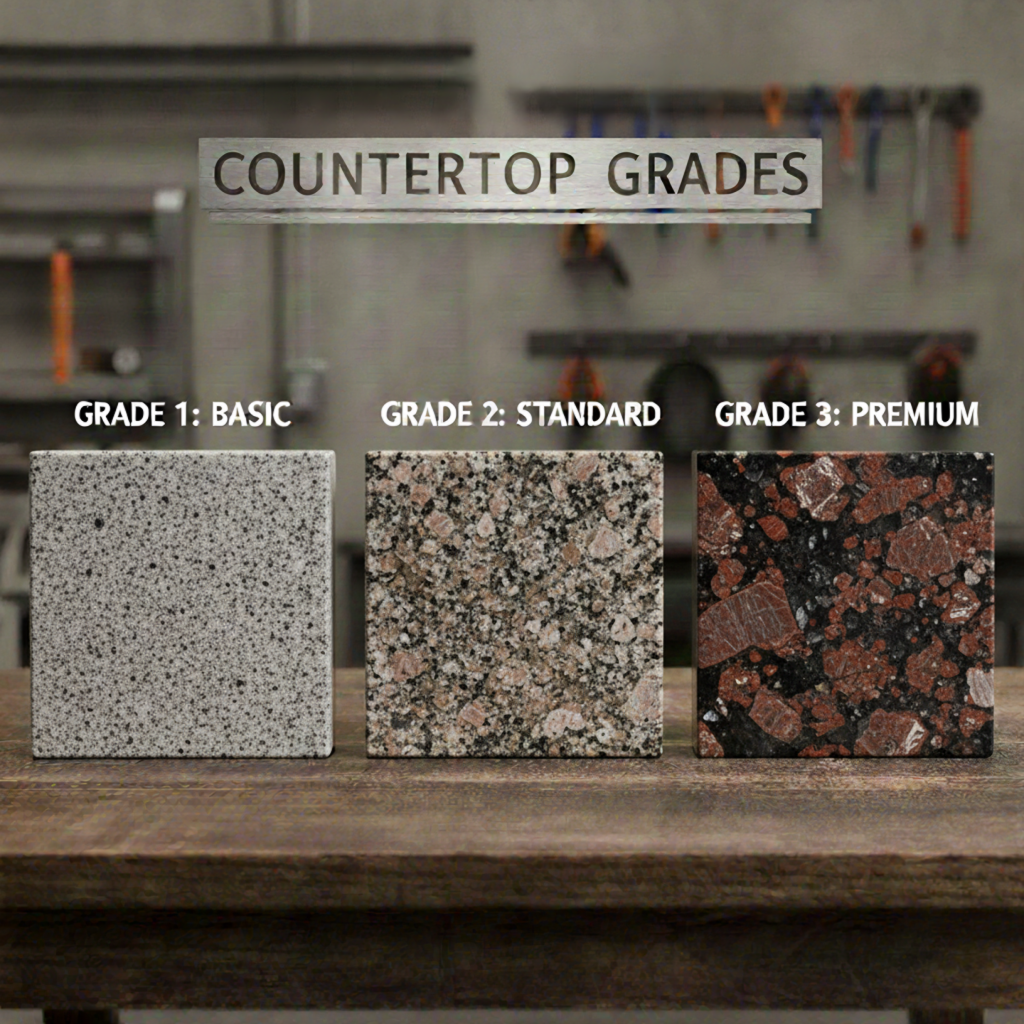
Level 1 – Entry-Level / Commercial Grade Granite
This is the most affordable category, often used in budget renovations and rental properties. Level 1 granite countertops usually feature:
- Thinner slabs (often 2cm, reinforced with plywood during installation)
- Simple patterns and consistent color tones
- Mass-imported stone from India, Brazil, or China
Pros: Cost-effective, readily available, easy to match with various cabinets.
Cons: Less unique, may require extra support, and can have less detailed finishing.
Level 2–3 – Mid-Grade Granite
It is optimal for the average homeowner. The mid-grade granite kitchen tops have superior durability and eye appeal with limited veining and color movement. These surfaces are normally 3cm in thickness, and they are polished to a smoother surface.
Best For: Family kitchens, long-term home upgrades, and balanced budgets.
Popular Picks: Santa Cecilia, Fantasy Brown, Giallo Ornamental
Level 4–7 – Premium / Exotic Granite
This is where granite comes in as a statement piece. Top-grade worktops present rare minerals, extreme veining, and unusual colorations that have been extracted from exclusive quarries all over the world.
Characteristics include:
- Bold, high-contrast patterns
- Superior polish and edge detailing
- Naturally heavier granite slabs with fewer imperfections
Ideal For: Luxury kitchens, designer homes, or anyone wanting a one-of-a-kind stone surface that doubles as art.
Related Article: Understanding Quartz Countertop Grades: What’s Worth Paying For?
Factors That Influence Granite Grade and Cost
Granite countertops are not necessarily the same in terms of price, even when they look the same. There are a number of determinants that are important in the grade, performance, and granite countertop cost. These will help you know whether you are getting a fair deal.
Origin of the Granite (Local vs. Imported)
The granite sourced from large areas such as India and Brazil is normally cheaper. But, there are exotic stone panels made in rare quarries in Italy or Scandinavia, and these are priced very highly because of the exclusivity and the cost involved in transport.
Thickness of the Slab
Granite is commonly available at the entry level at a thickness of 2cm and has to be reinforced with plywood. In between and higher grade slabs are made with 3cm or even 5cm variants, which are stronger and provide a luxurious sense. The more complex edge designs can also be done using thicker benchtops.
Color Rarity and Pattern Complexity
Simple veins are thrifty and bold veining, and high-contrast motion is indicative of high-priced materials. Such stones as Blue Bahia or Van Gogh Granite are valued due to the visual effects, and make the kitchen top a visual statement.
Finish and Surface Texture
There is also the manner in which the granite slab is finished, which influences the way it is classified. Simple polished surfaces are typical, but leathered, honed, and flamed surfaces are more laborious, adding to the value of the stone cover.
Fabrication and Edge Style
A plain straight edge is the norm, but ornamental edging, such as Ogee, Beveled, or Bullnose, is optional and expensive. The worktops of high quality are cut on CNC machines to have more seamless edges and smarter details.
How Much Should You Pay? Granite Grade vs. Budget
Granite is available for every budget, but what you choose should depend on how long you plan to live in your home and how intensively the surface will be used. Here’s a general investment guide to help you decide:
| Granite Grade | Average Cost per Sq. Ft. (Installed) | Best For | Long-Term Value |
| Level 1 (Basic) | $40 – $55 | Rental units, starter homes, quick flips | Moderate, Affordable but less unique |
| Level 2–3 (Mid-Range) | $55 – $75 | Family kitchens, standard remodels | High, Best cost-to-durability ratio |
| Level 4–7 (Premium / Exotic) | $80 – $150+ | Luxury builds, high-end resale | Exceptional, Becomes a focal feature |
When Is Premium Granite Worth It?
- If you’re in your forever home, invest in a durable, visually stunning stone panel that you’ll enjoy daily.
- If you’re planning to sell soon, mid-grade granite typically offers the highest ROI without overcapitalizing.
- If it’s for a rental or secondary space, an entry-level benchtop makes more financial sense.
How to Identify Genuine Granite Quality When Buying
Choosing the right granite countertops isn’t just about picking a pretty pattern; you need to ensure you’re investing in authentic, durable material. Here’s how to verify granite quality before committing to a purchase.
Questions to Ask Your Supplier
Before you finalize your worktop selection, don’t hesitate to ask:
- What grade is this granite slab, and why?
- Is this a 2cm or 3cm stone panel?
- Has it been pre-sealed, or will sealing be required after installation?
- Where is this particular benchtop material sourced from?
A reputable supplier should answer confidently and provide documentation if needed.
Simple Physical Tests You Can Perform
You don’t need to be a geologist to assess your kitchen top. Try these practical tests:
- Scratch Test: Real granite won’t scratch easily. If your key or coin leaves a mark, it’s either soft or fake.
- Water Absorption Test: Place a few drops of water on the stone surface, if it darkens quickly, it’s porous and lower-grade.
- Heat Test: Use a hot object like a pan; genuine granite won’t scorch.
Watch Out for Counterfeit Granite Lookalikes
Some retailers pass off laminate or quartz as granite, especially when patterns mimic stone-like textures. Still others sell engineered granite, which is merely resin-packed stone dust. When a worktop appears too smooth, it will probably be such that it has been made, natural granite will always be a variation.
Conclusion
Selecting the appropriate granite worktop is not only a matter of style, but it is also a choice that would influence the longevity, the price of the home, and the ease of use. When choosing a stone surface that is either an inexpensive entry-level product or an eye-catching high-end one, the top aspect is to make sure that the selections match your lifestyle, usage, and budget objectives. The mid-grade granite is usually the ideal choice to ensure a balance between the cost and performance in the long term, whereas the high-end benchtops can add a designer touch to a kitchen. Finally, having knowledge of the grading system is certain to mean that you’re not paying because of a pretty face but rather buying because of a valuable investment.