Introduction
Robots are no longer limited to factories or science fiction movies. Today, they clean our homes, assist doctors, and even drive vehicles. We see robots slowly becoming part of daily life, often without even noticing them.
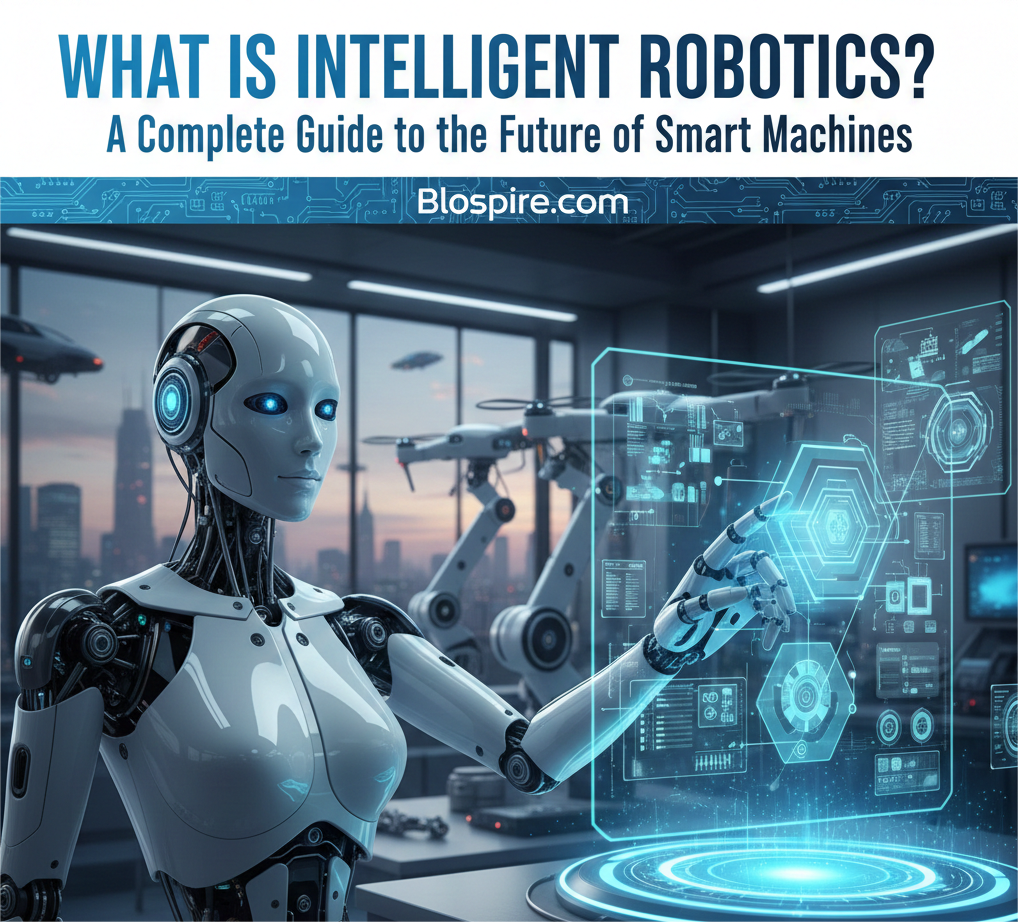
What makes modern robots special is intelligence. Intelligent robotics goes beyond simple automation. These machines can think, learn, and adapt. They do not just follow fixed rules.
This guide explains intelligent robotics in a simple way. You will learn how it works, why it matters, where it is used, and what the future looks like. If you are curious about smart machines, this guide is for you.
Understanding Intelligent Robotics
Definition of Intelligent Robotics
Intelligent robotics refers to robots that can sense their environment, make decisions, and take actions on their own. These robots use data, logic, and learning to perform tasks. They do not depend fully on human control.
What makes a robot intelligent is its ability to learn from experience. It can improve over time. It can also respond to changes instead of stopping or failing.
Intelligent robotics combines hardware and software. It uses artificial intelligence, sensors, and control systems to behave in a smart way.
Intelligent Robotics vs Traditional Robotics
Traditional robots work on fixed instructions. They repeat the same task again and again. If something changes, they often fail or stop working.
Intelligent robotics is different. These robots can adjust their actions. They learn from data and experience. They can work in uncertain and changing environments.
The biggest difference is autonomy. Intelligent robots can make decisions without constant human input. Traditional robots cannot do this.
Key Differences at a Glance
Decision-making in intelligent robotics is flexible and data-driven. These robots analyze situations before acting. Traditional robots only follow predefined rules.
Environmental awareness is another major difference. Intelligent robots understand their surroundings using sensors. Traditional robots have limited awareness.
Flexibility and adaptability make intelligent robotics powerful. These robots can handle new tasks. Traditional robots usually cannot.
Why Intelligent Robotics Matters Today
Many real-world problems are complex. They need flexible solutions. Intelligent robotics helps solve these problems in areas like healthcare, logistics, and farming.
Labor shortages are increasing worldwide. Intelligent robots help fill these gaps. They work continuously and reduce human workload.
Efficiency is also important. Intelligent robotics improves speed, accuracy, and consistency. This makes industries more competitive and reliable.
Core Components of Intelligent Robotics
Artificial Intelligence (AI)
Artificial intelligence is the brain of intelligent robotics. It allows robots to think, analyze, and decide. Without AI, robots would only follow simple commands.
AI helps robots recognize patterns. It allows them to understand data from sensors. This makes intelligent behavior possible.
Robots use AI to plan actions. They also use it to predict outcomes and avoid mistakes.
Machine Learning
Machine learning allows robots to learn from data. They improve performance without being reprogrammed. This is a key part of intelligent robotics.
Supervised learning uses labeled data. Unsupervised learning finds patterns on its own. Reinforcement learning learns through rewards and penalties.
Over time, robots become better at tasks. They learn from success and failure. This makes them smarter with use.
Deep Learning and Neural Networks
Deep learning helps robots understand complex data. It is inspired by the human brain. Neural networks process information in layers.
This technology is used for pattern recognition. Robots can recognize faces, objects, and sounds. This improves perception.
Deep learning is widely used in vision and speech. It helps robots see and hear like humans.
Sensors and Perception Systems
Sensors help robots understand the world. They collect information about the environment. Without sensors, robots would be blind and unaware.
Perception systems process sensor data. They help robots understand what the data means. This supports intelligent decision-making.
Good perception is essential for safe and accurate actions. It allows robots to interact with real environments.
Types of Sensors
Vision sensors like cameras and LiDAR help robots see. They detect objects, distance, and movement.
Tactile sensors allow robots to feel pressure and touch. This is important for delicate tasks.
Audio and proximity sensors help robots hear sounds and detect nearby objects. These sensors improve awareness and safety.
Actuators and Motion Control
Actuators turn decisions into movement. They control motors and joints. This allows robots to move and perform actions.
Motion control ensures smooth and accurate movement. It helps robots maintain balance and stability.
In intelligent robotics, motion is carefully planned. This improves efficiency and safety.
Precision and Dexterity
Precision allows robots to perform fine movements. This is important in surgery and assembly tasks.
Dexterity helps robots handle complex actions. It allows them to grip, rotate, and manipulate objects.
Good motor control improves performance. It also reduces errors and damage.
Control Systems and Decision-Making
Control systems manage robot behavior. They decide how and when actions happen. This is the core of intelligent robotics.
Some decisions are made instantly. Others are planned over time. Both are important.
Decision-making systems balance speed and accuracy. This helps robots act correctly.
Reactive vs Deliberative Control
Reactive control handles immediate responses. It reacts quickly to changes. This is useful for safety.
Deliberative control focuses on planning. It thinks ahead and chooses the best path.
Intelligent robotics often uses both. This creates balanced and smart behavior.
How Intelligent Robots Work
Perception–Decision–Action Loop
Intelligent robots follow a simple loop. First, they perceive the environment. Then, they decide what to do. Finally, they take action.
This loop runs continuously. It allows real-time adaptation. Robots constantly update their behavior.
This process makes robots responsive and intelligent. It mimics human thinking patterns.
Learning from the Environment
Robots learn through feedback. They observe the results of actions. This helps them improve.
Feedback loops allow continuous learning. Robots adjust behavior based on outcomes.
Learning from the environment is key to intelligent robotics. It supports long-term improvement.
Reinforcement Learning in Robotics
Reinforcement learning uses trial and error. Robots try actions and receive rewards or penalties.
Over time, they choose better actions. This improves performance.
This method is useful for complex tasks. It helps robots learn independently.
Human–Robot Interaction (HRI)
Human–robot interaction focuses on communication. It allows humans and robots to work together.
Good interaction improves usability. It also increases trust.
Intelligent robotics aims to make interaction natural and easy.
Natural Language Processing
Natural language processing allows robots to understand speech. Humans can give voice commands.
Robots can also respond verbally. This makes interaction conversational.
This technology improves accessibility. It makes robots easier to use.
Gesture and Emotion Recognition
Gesture recognition allows robots to understand body language. This helps in noisy environments.
Emotion recognition helps robots respond socially. They can adjust behavior based on mood.
This creates socially aware machines. It improves user experience.
Types of Intelligent Robots
Autonomous Robots
Autonomous robots operate independently. They make decisions without human control.
They navigate and perform tasks on their own. This increases efficiency.
Autonomy is a core feature of intelligent robotics.
Mobile Robots
Mobile robots move freely. Examples include drones and self-driving vehicles.
They use sensors and AI to navigate. They avoid obstacles and plan routes.
These robots are used in delivery, inspection, and transport.
Industrial Autonomous Robots
These robots work in factories. They manage complex manufacturing tasks.
They adjust to changes in production. This improves flexibility.
Smart manufacturing relies heavily on these robots.
Collaborative Robots (Cobots)
Cobots work alongside humans. They are designed for safety.
They assist with repetitive tasks. This reduces strain on workers.
Cobots improve productivity without replacing humans.
Use Cases in Factories
Cobots handle shared tasks. They assist in assembly and packaging.
They improve efficiency. They also reduce errors.
Factories benefit from human-robot teamwork.
Service Robots
Service robots work in human environments. They assist people directly.
They are designed for interaction. This makes them user-friendly.
Service robots are growing in popularity.
Healthcare Robots
Healthcare robots assist doctors and nurses. They help in surgery and care.
They improve precision and reduce workload. This improves patient outcomes.
These robots support modern healthcare systems.
Domestic Robots
Domestic robots help at home. They clean, monitor security, and assist daily tasks.
They improve comfort and convenience. They save time.
Home robotics is becoming more common.
Applications of Intelligent Robotics
Manufacturing and Industry 4.0
Intelligent robotics supports smart factories. Machines communicate and optimize processes.
Predictive maintenance reduces downtime. Robots detect issues early.
This improves efficiency and reduces costs.
Healthcare and Medicine
Robots assist in diagnostics and surgery. They improve accuracy.
They also help in patient care. This supports healthcare staff.
Intelligent robotics improves medical outcomes.
Agriculture
Robots monitor crops and soil. They support precision farming.
They reduce waste and improve yields. This supports sustainable agriculture.
Farming becomes more efficient and data-driven.
Logistics and Supply Chain
Robots manage warehouses. They sort and transport goods.
Delivery robots improve speed. They reduce human workload.
Supply chains become faster and more reliable.
Defense and Space Exploration
Robots operate in dangerous environments. They reduce human risk.
They explore space and handle hazardous tasks. This expands capabilities.
Intelligent robotics supports exploration and safety.
Benefits of Intelligent Robotics
Increased Efficiency and Productivity
Robots work faster and more accurately. They reduce errors.
They operate continuously. This boosts productivity.
Businesses benefit from improved performance.
Enhanced Safety
Robots handle dangerous tasks. This protects humans.
They reduce accidents. Safety improves across industries.
This is a major advantage of intelligent robotics.
Scalability and Flexibility
Robots adapt to new tasks. They scale operations easily.
This supports business growth. It also reduces reconfiguration costs.
Flexibility is a key benefit.
Challenges and Limitations
Technical Challenges
Intelligent robotics depends on data. Poor data affects performance.
Hardware limitations also exist. Sensors and batteries can restrict use.
Technical improvement is ongoing.
Ethical and Social Concerns
Job displacement is a concern. Automation affects employment.
Bias in AI decisions is another issue. Fairness must be ensured.
Ethics is an important discussion.
Trust and Accountability
Responsibility is unclear when robots make decisions. This raises legal questions.
Trust in robots must be built. Transparency helps.
Clear rules are needed.
Cost and Accessibility
Development costs are high. Maintenance is expensive.
This limits access for small businesses. Costs must reduce over time.
Affordable solutions are needed.
The Future of Intelligent Robotics
Emerging Trends
Swarm robotics uses groups of robots. They work together.
Self-learning robots improve independently. They require less programming.
These trends shape the future.
Integration with Other Technologies
Robotics integrates with IoT. Devices share data.
Edge computing improves speed. 5G supports real-time control.
Integration enhances performance.
The Role of Intelligent Robotics in Society
Robots support smart cities. They manage traffic and services.
Human augmentation enhances abilities. Robotics supports health and productivity.
Society will continue to evolve.
Intelligent Robotics vs Artificial Intelligence
How They Overlap
Both use similar algorithms. They share data and learning methods.
AI supports robotic intelligence. Robotics applies AI physically.
They work closely together.
Key Distinctions
AI is software-based. It exists digitally.
Intelligent robotics includes physical machines. It interacts with the real world.
This is embodied intelligence.
How to Get Started in Intelligent Robotics
Required Skills and Knowledge
Programming is essential. AI knowledge is important.
Electronics and mechanics are also needed. Problem-solving skills help.
A strong foundation is key.
Educational Pathways
Degrees in robotics or AI are useful. Certifications add value.
Online courses offer flexibility. Learning resources are widely available.
Continuous learning is important.
Tools and Platforms
Simulation software helps practice. It reduces risk.
Robotics frameworks simplify development. They speed up learning.
Good tools support growth.
Conclusion
Intelligent robotics combines AI, sensors, and machines. It creates smart and adaptive robots.
These robots are changing industries. They improve efficiency, safety, and flexibility.
The future will be shaped by intelligent robotics. Responsible development is essential.
With careful planning, intelligent robotics can benefit everyone.
For More Information, Visit Blospire
Frequently Asked Questions (FAQs)
1. What is intelligent robotics in simple words?
Intelligent robotics refers to robots that can think, learn, and make decisions on their own. These robots use artificial intelligence, sensors, and data to understand their environment. Unlike basic robots, they can adapt to changes and improve over time.
2. How is intelligent robotics different from artificial intelligence?
Artificial intelligence is mainly software that analyzes data and makes decisions. Intelligent robotics uses AI but also includes physical machines. In simple terms, AI thinks, while intelligent robotics thinks and acts in the real world.
3. Where is intelligent robotics used today?
Intelligent robotics is used in many areas like manufacturing, healthcare, agriculture, logistics, and space exploration. You can also see it in homes through cleaning robots and smart assistants. Its use is growing every year.
4. Can intelligent robots replace human jobs?
Intelligent robots may replace some repetitive or dangerous jobs. However, they also create new opportunities in technology, maintenance, and design. Most experts believe robots will work alongside humans rather than fully replace them.
5. Is intelligent robotics hard to learn for beginners?
Learning intelligent robotics can seem challenging at first, but beginners can start with basic programming and simple robotics kits. Many online courses and tools are available today. With consistent practice, anyone can learn the basics and grow step by step.