
Introduction to Intelligent Robotics
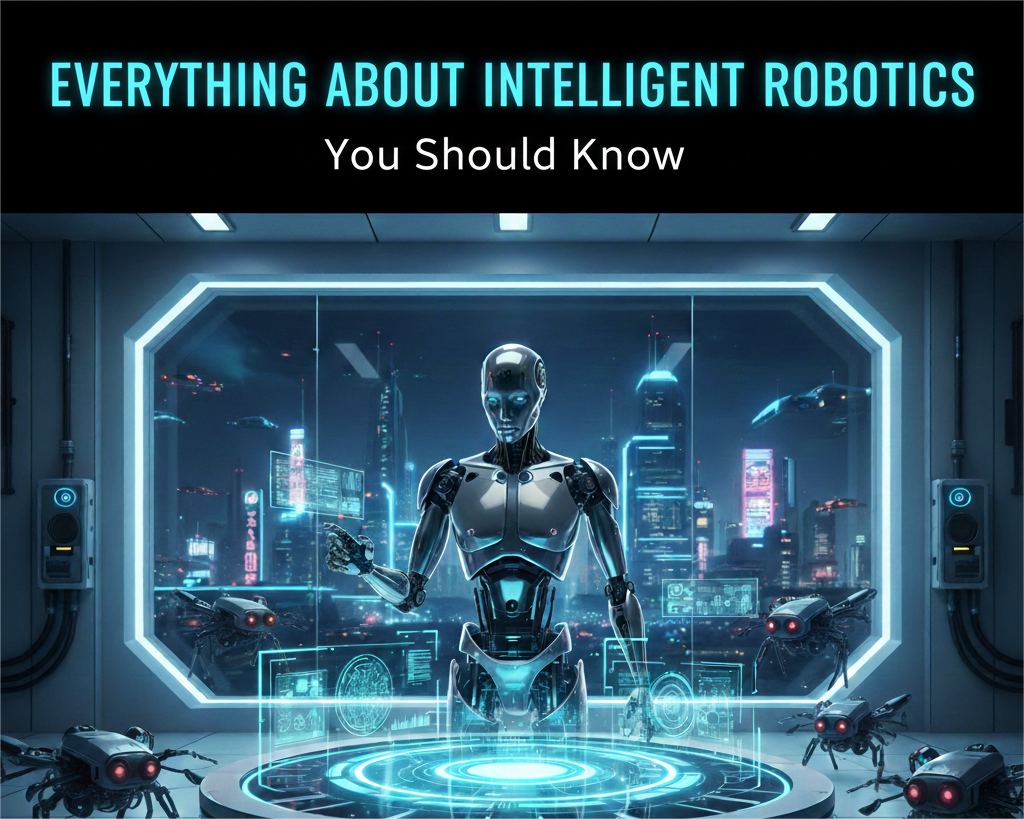
Intelligent robotics is changing the way we live and work. From factories to homes, robots are becoming smarter every day. They are no longer simple machines that only follow commands. Today’s robots can think, learn, and make decisions. This makes them more useful and more powerful. In this blog, you will learn everything about intelligent robotics in a simple way. Even if you are a beginner, this guide will help you understand the topic clearly.
What Is Intelligent Robotics?
Definition and Core Concept
Intelligent robotics is a branch of robotics that combines robots with artificial intelligence. These robots can sense their environment and respond in a smart way. They do not just repeat fixed actions. Instead, they learn from data and experience. Intelligent robotics focuses on making robots more human-like in thinking. This allows robots to solve problems on their own. That is what makes them “intelligent.”
How Intelligent Robotics Differs from Traditional Robotics
Traditional robots follow pre-programmed instructions only. They cannot change their behavior easily. Intelligent robotics is different because it allows learning and adaptation. These robots can handle new situations. They use sensors, AI, and software to understand their surroundings. Intelligent robots can improve their performance over time. This makes them more flexible than traditional robots.
Why Intelligent Robotics Matters Today
Intelligent robotics is important because the world is changing fast. Industries need speed, accuracy, and automation. Intelligent robots help reduce human effort in risky tasks. They also improve productivity and quality. In daily life, robots assist with cleaning, healthcare, and transport. Intelligent robotics helps solve problems that humans cannot handle alone. That is why it matters more than ever today.
Brief History of Intelligent Robotics
Early Mechanical Automation
The journey of robotics started with simple machines. These machines were built to reduce manual labor. Early automation used gears, levers, and motors. They had no intelligence at all. They could only perform basic repeated tasks. This was the foundation of modern robotics.
Emergence of AI-Driven Robots
The rise of computers changed robotics forever. Scientists started adding artificial intelligence to robots. This allowed robots to process information and make decisions. Early AI robots were limited but promising. Over time, better algorithms and faster computers improved them. This led to the birth of intelligent robotics.
Key Milestones in Intelligent Robotics Development
Many milestones shaped intelligent robotics. The introduction of machine learning was a big step. Robots learned from data instead of fixed rules. Computer vision helped robots “see” the world. Autonomous robots started navigating on their own. Each milestone made robots smarter and more useful. Today, intelligent robotics is a fast-growing field.
Fundamentals of Intelligent Robotics
Core Components of Intelligent Robots
Intelligent robots are made of hardware and software. Both parts work together to make the robot smart. Hardware helps the robot move and sense the world. Software helps it think and decide. Without either one, intelligent robotics is not possible. Understanding these basics is very important.
Hardware Components
Sensors and Actuators
Sensors allow robots to feel their environment. They collect data like light, sound, and distance. Actuators help robots move and perform actions. Motors are common actuators. Sensors and actuators work together closely. They help robots interact with the real world.
Robotic Arms, Mobility Systems, and End Effectors
Robotic arms are used for tasks like lifting and assembling. Mobility systems help robots move around. Wheels, legs, or tracks are used for movement. End effectors are tools attached to robotic arms. These include grippers and tools. They allow robots to handle objects easily.
Software Components
Control Systems
Control systems manage robot movement and actions. They send commands to motors and actuators. These systems ensure smooth and accurate motion. Control systems also handle feedback from sensors. This helps the robot correct its actions. Good control systems improve robot performance.
Operating Systems for Robots
Robots use special operating systems. These systems manage hardware and software tasks. They help developers build complex robot applications. Robot operating systems support communication and control. They make intelligent robotics easier to develop. This is very important for modern robots.
Intelligence in Robotics
Artificial Intelligence in Robotics
Artificial intelligence is the brain of intelligent robotics. It allows robots to think and learn. AI helps robots understand data from sensors. It also helps with decision-making. Without AI, robots would not be intelligent. AI is the key driver of smart robots.
Machine Learning
Machine learning allows robots to learn from experience. Robots improve by analyzing data. They do not need constant reprogramming. Machine learning makes robots more flexible. It is widely used in intelligent robotics. This helps robots adapt to new tasks.
Deep Learning
Deep learning uses neural networks. These networks work like the human brain. They help robots recognize images and speech. Deep learning improves accuracy. It is very powerful for vision and voice tasks. Intelligent robotics relies heavily on deep learning.
Reinforcement Learning
Reinforcement learning teaches robots through rewards. Robots learn by trial and error. Good actions are rewarded. Bad actions are avoided. This method helps robots learn complex tasks. It is common in autonomous robots.
Decision-Making and Autonomy
Rule-Based Systems
Rule-based systems use fixed rules. Robots follow predefined logic. These systems are simple and reliable. However, they are not very flexible. They work best in controlled environments. Many early robots used rule-based systems.
Adaptive and Learning-Based Systems
Adaptive systems can change behavior. They learn from data and experience. These systems improve over time. They are more suitable for real-world tasks. Intelligent robotics mainly uses adaptive systems. This allows true autonomy.
Key Technologies Powering Intelligent Robotics
Sensors and Perception Systems
Vision Systems
Vision systems help robots see the world. Cameras capture images and videos. Computer vision processes this data. Robots can identify objects and people. Vision systems are vital for intelligent robotics. They enable safe interaction.
Cameras and Computer Vision
Cameras act as robot eyes. Computer vision analyzes images. Robots can detect shapes and colors. This helps with navigation and tasks. Computer vision is widely used in intelligent robotics. It improves accuracy and safety.
Object Recognition and Tracking
Robots identify objects using AI. They track moving objects in real time. This is useful in factories and traffic systems. Object recognition improves efficiency. It helps robots make better decisions. Intelligent robotics depends on this ability.
Proximity and Environmental Sensors
LiDAR and Radar
LiDAR uses lasers to measure distance. Radar uses radio waves. Both help robots map environments. They are used in autonomous vehicles. These sensors work in low light. Intelligent robotics benefits greatly from them.
Ultrasonic and Infrared Sensors
Ultrasonic sensors use sound waves. Infrared sensors use heat signals. They help detect obstacles. These sensors are low-cost and effective. They are common in service robots. Intelligent robotics often uses them.
Control and Motion Planning
Kinematics and Dynamics
Kinematics studies robot motion. Dynamics studies forces and movement. Both are important for robot control. They ensure smooth and safe movement. Intelligent robotics uses these principles. This improves robot efficiency.
Forward and Inverse Kinematics
Forward kinematics calculates position from joint angles. Inverse kinematics does the opposite. Both help control robotic arms. They are essential for precision tasks. Intelligent robotics relies on these methods. They improve accuracy.
Path Planning Algorithms
Deterministic Planning
Deterministic planning follows fixed rules. It works in known environments. The path is predictable. It is simple and fast. However, it lacks flexibility. Intelligent robotics uses it in controlled spaces.
Probabilistic Planning
Probabilistic planning handles uncertainty. It works in dynamic environments. Robots calculate multiple paths. This method is more flexible. Intelligent robotics often prefers this approach. It improves autonomy.
Human–Robot Interaction (HRI)
Natural Language Processing
Natural language processing allows robots to understand speech. Humans can talk to robots naturally. Robots can respond with voice or text. This improves user experience. Intelligent robotics uses NLP widely. It makes robots more friendly.
Gesture and Emotion Recognition
Robots can read human gestures. They can also detect emotions. This helps in social interaction. Robots respond better to human needs. Emotion recognition improves trust. Intelligent robotics benefits greatly from this.
Collaborative Robots (Cobots)
Cobots work with humans safely. They share tasks in factories. Cobots are flexible and smart. They adjust to human actions. Intelligent robotics makes cobots possible. They improve productivity.
Types of Intelligent Robots
Industrial Intelligent Robots
Industrial robots are used in factories. They perform tasks like welding and assembly. Intelligent robotics makes them more efficient. They reduce errors and waste. Smart factories rely on these robots. They are essential in modern industry.
Smart Manufacturing Robots
Smart robots adapt to production changes. They optimize workflows automatically. These robots increase speed and quality. Intelligent robotics enables smart manufacturing. This reduces costs. It also improves safety.
Autonomous Assembly and Inspection Robots
These robots assemble products independently. They also inspect for defects. AI helps detect problems early. This improves quality control. Intelligent robotics ensures high accuracy. It saves time and money.
Service Robots
Healthcare and Medical Robots
Medical robots assist doctors and nurses. They help in surgery and diagnosis. Intelligent robotics improves precision. It reduces human error. Patients benefit from better care. Healthcare is a major application.
Surgical Robots
Surgical robots assist in complex surgeries. They offer high precision. Surgeons control them with accuracy. Intelligent robotics improves outcomes. Recovery time is reduced. This is a big advancement.
Rehabilitation and Assistive Robots
These robots help patients recover. They assist with movement therapy. Intelligent robotics adapts exercises. Patients receive personalized care. This improves recovery speed. It enhances quality of life.
Domestic and Personal Robots
Cleaning and Home Assistance Robots
These robots clean homes automatically. They can vacuum and mop floors. Intelligent robotics helps them avoid obstacles. They learn room layouts. Home life becomes easier. These robots save time.
Mobile and Autonomous Robots
Autonomous Vehicles
Self-driving cars use intelligent robotics. They sense roads and traffic. AI helps with decisions. Safety is a top priority. Autonomous vehicles reduce accidents. They represent the future of transport.
Drones and Aerial Robots
Drones fly without human control. They are used for delivery and mapping. Intelligent robotics helps them navigate. Drones are fast and efficient. They are used in many industries. Their use is growing rapidly.
Social and Humanoid Robots
Design and Behavioral Intelligence
Humanoid robots look and act human-like. They use intelligent behavior models. This helps interaction with people. Design focuses on comfort and trust. Intelligent robotics enables realistic behavior. These robots feel more natural.
Use in Education and Customer Service
Social robots teach students. They assist customers in stores. They answer questions politely. Intelligent robotics improves communication. These robots enhance learning and service. They are becoming popular.
Applications of Intelligent Robotics
Industrial Applications
Manufacturing and Automation
Robots automate production lines. They work faster than humans. Intelligent robotics improves efficiency. Errors are reduced. Factories become smarter. Automation is the future.
Quality Control and Predictive Maintenance
Robots inspect products for defects. They predict machine failures. This reduces downtime. Intelligent robotics saves costs. Maintenance becomes proactive. Quality improves greatly.
Healthcare Applications
Diagnosis and Surgery Assistance
Robots help diagnose diseases. They assist doctors in surgery. Intelligent robotics improves accuracy. Patients receive better treatment. Healthcare becomes more advanced. Technology saves lives.
Elderly Care and Patient Monitoring
Robots monitor patient health. They remind patients to take medicine. Intelligent robotics provides support. Elderly people stay independent longer. Care becomes more efficient. Families feel safer.
Agriculture and Environmental Use
Precision Farming
Robots analyze soil and crops. They apply water and fertilizer precisely. Intelligent robotics improves yield. Waste is reduced. Farming becomes sustainable. Technology supports food security.
Autonomous Harvesting and Monitoring
Robots harvest crops automatically. They monitor plant health. Intelligent robotics adapts to conditions. Farmers save labor. Productivity increases. Agriculture becomes smarter.
Defense, Security, and Space Exploration
Surveillance and Reconnaissance
Robots monitor borders and areas. They gather information safely. Intelligent robotics reduces risk. Security improves. Human lives are protected. This is very important.
Space Rovers and Planetary Exploration
Robots explore other planets. They collect data in harsh environments. Intelligent robotics enables autonomy. Communication delays are handled. Space missions become successful. Robots go where humans cannot.
Retail, Logistics, and Warehousing
Autonomous Delivery Systems
Robots deliver packages automatically. They navigate cities and buildings. Intelligent robotics ensures safe delivery. Speed improves. Costs are reduced. Customers are satisfied.
Inventory Management Robots
Robots manage warehouse stock. They track items accurately. Intelligent robotics reduces errors. Inventory updates in real time. Warehouses become efficient. Operations run smoothly.
Artificial Intelligence and Learning in Intelligent Robotics
Machine Learning for Robots
Supervised vs Unsupervised Learning
Supervised learning uses labeled data. Unsupervised learning finds patterns alone. Both are used in robotics. Intelligent robotics benefits from both methods. Learning becomes flexible. Robots improve continuously.
Reinforcement Learning in Robotics
Robots learn by doing. Rewards guide behavior. Mistakes teach lessons. Intelligent robotics uses this method often. Complex tasks become possible. Autonomy increases.
Computer Vision in Robotics
Object Detection and Scene Understanding
Robots identify objects and scenes. They understand surroundings. Intelligent robotics uses vision heavily. This helps navigation. Tasks become safer. Accuracy improves.
Visual SLAM (Simultaneous Localization and Mapping)
Visual SLAM helps robots map areas. They locate themselves at the same time. This is useful in unknown spaces. Intelligent robotics relies on SLAM. Autonomous movement becomes possible. Exploration improves.
Cognitive Robotics
Knowledge Representation
Robots store knowledge digitally. They use this knowledge to act. Intelligent robotics models human thinking. Information is structured. Decisions become smarter. Learning improves.
Reasoning and Problem Solving
Robots analyze problems logically. They choose the best solutions. Intelligent robotics enables reasoning. Robots act independently. Complex challenges are solved. Intelligence grows.
Challenges in Intelligent Robotics
Technical Challenges
Perception in Unstructured Environments
Robots struggle in unpredictable places. Lighting and obstacles vary. Intelligent robotics still faces limits. Perception errors can occur. Research is ongoing. Improvements are needed.
Real-Time Processing Constraints
Robots need fast decisions. Processing large data is hard. Delays affect performance. Intelligent robotics requires powerful hardware. Optimization is important. Speed matters.
Ethical and Social Challenges
Job Displacement and Workforce Impact
Robots replace some jobs. This worries workers. Intelligent robotics changes industries. New jobs also appear. Skills must evolve. Balance is needed.
Privacy and Surveillance Concerns
Robots collect data constantly. Privacy risks exist. Intelligent robotics must respect rights. Laws are needed. Trust is important. Ethics matter.
Safety and Reliability
Human Safety in Human-Robot Collaboration
Robots work near humans. Safety is critical. Intelligent robotics includes safety systems. Collisions must be avoided. Trust increases. Collaboration improves.
Fault Tolerance and Robustness
Robots must handle failures. Systems should recover quickly. Intelligent robotics focuses on reliability. Robust design is key. Downtime is reduced. Performance stays high.
Cost and Accessibility
High Development and Maintenance Costs
Robots are expensive to build. Maintenance also costs money. Intelligent robotics needs investment. Small businesses struggle. Costs must decrease. Innovation helps.
Barriers for Small Businesses
Small firms lack resources. Adoption is slow. Intelligent robotics should be affordable. Support programs help. Accessibility must improve. Growth depends on this.
Ethics, Laws, and Regulations in Intelligent Robotics
Ethical Considerations
Robot Autonomy and Accountability
Robots make decisions independently. Responsibility becomes unclear. Intelligent robotics raises ethical questions. Humans must stay accountable. Rules are needed. Ethics guide development.
Bias in AI-Driven Robots
AI can have bias. This affects decisions. Intelligent robotics must be fair. Data quality matters. Bias must be reduced. Trust depends on fairness.
Legal and Regulatory Frameworks
Safety Standards
Robots must follow safety rules. Standards protect people. Intelligent robotics must comply. Testing is required. Regulations ensure safety. Compliance is essential.
Liability and Responsibility
Who is responsible for robot actions? This is a big question. Intelligent robotics needs clear laws. Liability must be defined. Legal clarity is important. Society needs answers.
Trust and Public Acceptance
Transparency and Explainable AI
People want to understand robots. Explainable AI helps. Intelligent robotics should be transparent. Decisions must be clear. Trust grows with understanding. Acceptance increases.
Human Oversight and Control
Humans must stay in control. Robots should assist, not replace judgment. Intelligent robotics supports oversight. Control systems are necessary. Safety is maintained. Balance is key.
Future Trends in Intelligent Robotics
Advances in AI and Robotics Integration
AI and robotics are merging further. Systems become smarter. Intelligent robotics evolves rapidly. Integration improves performance. Innovation continues. The future looks exciting.
Self-Learning and Self-Repairing Robots
Future robots will learn on their own. They may fix themselves. Intelligent robotics moves toward autonomy. Maintenance costs drop. Reliability increases. This is a big leap.
Swarm Robotics
Many robots work together. They behave like a swarm. Intelligent robotics enables coordination. Tasks are completed faster. Systems are scalable. Efficiency improves.
Intelligent Robotics and Society
Smart Cities and Infrastructure
Robots manage traffic and services. Cities become smarter. Intelligent robotics improves efficiency. Energy use is optimized. Living standards rise. Urban life improves.
Robotics in Education and Skill Development
Robots help teach students. Learning becomes interactive. Intelligent robotics prepares future workers. Skills are developed early. Education evolves. Technology supports growth.
Human–Robot Symbiosis
Brain–Computer Interfaces
Brains connect with machines. Robots respond to thoughts. Intelligent robotics explores this area. Medical applications grow. Possibilities expand. Science advances.
Augmented Intelligence vs Artificial Intelligence
Augmented intelligence supports humans. It does not replace them. Intelligent robotics can assist decision-making. Humans stay in control. Collaboration is key. Balance matters.
Careers and Skills in Intelligent Robotics
Key Skills Required
Robotics Engineering Skills
Engineers design robot systems. Mechanics and electronics are important. Intelligent robotics requires technical knowledge. Problem-solving skills matter. Creativity is needed. Engineering is core.
AI and Data Science Knowledge
AI skills are essential. Data analysis improves robots. Intelligent robotics relies on data. Machine learning knowledge is needed. Programming skills help. Continuous learning is important.
Educational Pathways
Degrees and Certifications
Degrees in robotics or AI help. Certifications add value. Education builds foundation. Intelligent robotics requires formal learning. Universities offer programs. Learning never stops.
Online Learning and Research Opportunities
Online courses are available. Research drives innovation. Intelligent robotics evolves fast. Continuous learning is needed. Resources are accessible. Anyone can start.
Future Job Roles
Robotics Engineers and AI Specialists
Demand is growing. Jobs are well-paid. Intelligent robotics creates opportunities. Engineers build the future. Specialists innovate. Careers are exciting.
Ethics and Policy Experts in Robotics
Ethics experts guide development. Policies shape use. Intelligent robotics needs regulation. Experts ensure safety. Society benefits. This role is important.
Conclusion
Summary of Key Takeaways
Intelligent robotics combines AI and machines. It improves efficiency and safety. Robots learn and adapt. Applications are everywhere. Challenges exist but progress continues. Understanding this field is important.
The Long-Term Impact of Intelligent Robotics
Robots will shape the future. Industries will transform. Intelligent robotics will improve lives. Society must adapt. Ethics and skills matter. Change is inevitable.
Preparing for a Robotics-Driven Future
Frequently Asked Questions (FAQs) About Intelligent Robotics
Learning is key to success. Skills must evolve. Intelligent robotics offers opportunities. Embrace technology wisely. Stay informed and adaptable. The future is robotic.
For More Information, Visit Blospire
What is intelligent robotics in simple words?
Intelligent robotics means robots that can think and learn. These robots use artificial intelligence to make decisions. They can understand their environment. They do not just follow fixed instructions. Intelligent robots improve their actions over time. This makes them smarter than normal robots.
How is intelligent robotics different from traditional robotics?
Traditional robots only follow pre-written programs. They cannot change their behavior easily. Intelligent robotics allows robots to learn and adapt. These robots can handle new situations. They use AI, sensors, and data. This makes intelligent robots more flexible and useful.
What are the main components of intelligent robotics?
Intelligent robotics has two main parts. One is hardware, and the other is software. Hardware includes sensors, motors, and robotic arms. Software includes control systems and AI algorithms. Both parts work together. This combination makes robots intelligent.
What role does artificial intelligence play in intelligent robotics?
Artificial intelligence is the brain of intelligent robotics. It helps robots think and learn. AI processes data from sensors. It helps robots make decisions. Machine learning allows robots to improve over time. Without AI, robots would not be intelligent.
What are some real-life examples of intelligent robotics?
Examples include self-driving cars and delivery drones. Robotic vacuum cleaners are also intelligent robots. In hospitals, surgical robots are used. Factories use smart manufacturing robots. Even chat-based service robots use intelligent robotics. These examples are common today.
Where is intelligent robotics used the most?
Intelligent robotics is used in many fields. Manufacturing is one major area. Healthcare also uses intelligent robots. Agriculture uses robots for farming. Logistics and warehouses rely on robots. Defense and space exploration also use them. The usage is growing fast.
Can intelligent robots work without human control?
Yes, many intelligent robots can work on their own. They are called autonomous robots. They can sense, decide, and act independently. However, humans still supervise them. Full human control is not completely removed. Safety is always important.
Is intelligent robotics dangerous for human jobs?
Intelligent robotics can replace some jobs. This is a common concern. However, it also creates new jobs. People are needed to design and manage robots. New skills become important. The workforce changes, not disappears.
What skills are needed to work in intelligent robotics?
You need basic robotics knowledge. Skills in programming are important. AI and machine learning knowledge helps a lot. Problem-solving skills are needed. Data analysis is also useful. Continuous learning is very important in this field.
Is intelligent robotics expensive?
Yes, intelligent robotics can be costly. Development and maintenance cost a lot. Small businesses may find it hard to afford. However, costs are slowly decreasing. Technology is becoming more accessible. In the future, it will be more affordable.
What are the biggest challenges in intelligent robotics?
Robots struggle in unpredictable environments. Real-time decision-making is difficult. Ethical issues are also a challenge. Privacy and safety concerns exist. High costs are another problem. Researchers are working to solve these issues
Is intelligent robotics safe for humans?
Safety is a top priority in intelligent robotics. Robots are designed with safety systems. Sensors help avoid accidents. Collaborative robots are made to work safely with humans. Regulations and standards are followed. Human safety always comes first.
What is the future of intelligent robotics?
The future of intelligent robotics is very bright. Robots will become smarter and faster. They will learn on their own. More industries will use robots. Human–robot collaboration will increase. Intelligent robotics will shape the future world.