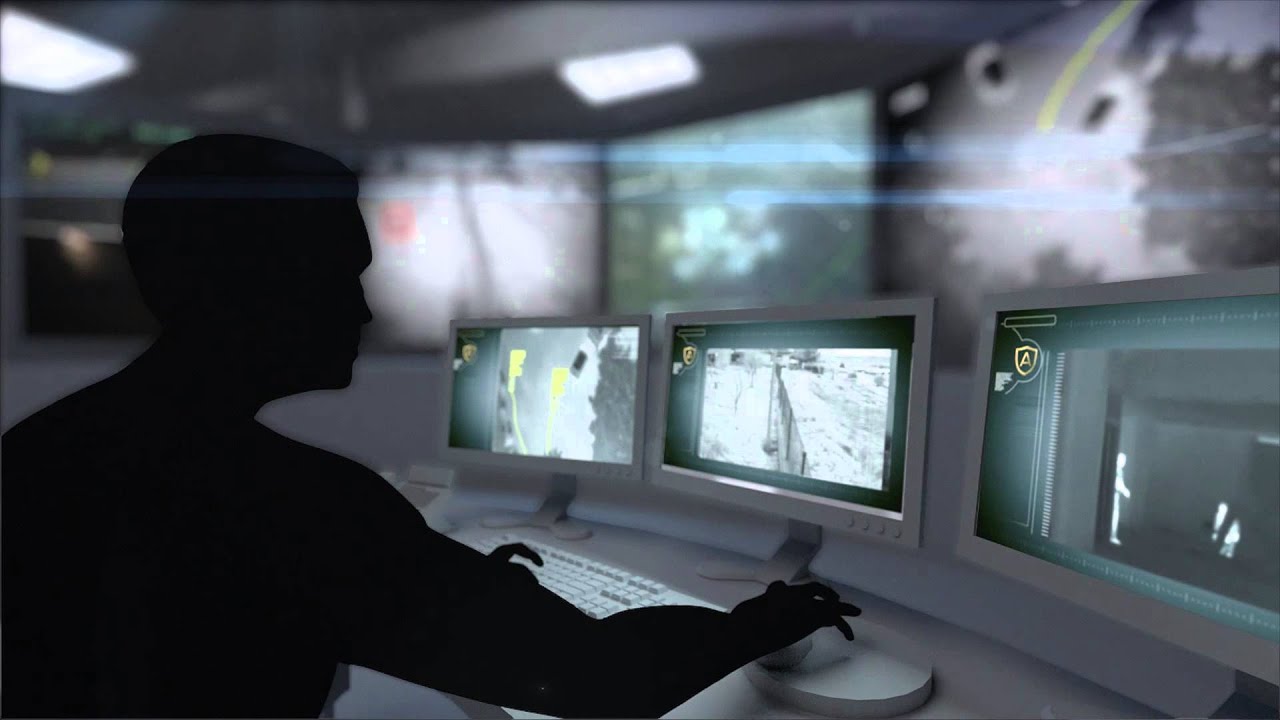

For decades, the Closed-Circuit Television (CCTV) camera has been the silent sentinel of security, a ubiquitous fixture in businesses, public spaces, and private homes. Its presence alone has always served as a powerful deterrent, but the reality of traditional CCTV is that it is fundamentally a reactive tool. It records the crime, providing invaluable evidence for police and insurance companies, but it does nothing to stop the event from occurring in the first place. The footage is a post-mortem, a record of loss, damage, or violation.
Today, however, a profound paradigm shift is redefining the role of the security camera. The evolution from passive recording to live CCTV monitoring—often referred to as remote video surveillance or virtual guarding—has transformed the system into a proactive force capable of real-time threat detection and immediate intervention. This is the crucial difference: security is no longer about documenting a crime; it is about preventing it entirely. This transition is not merely an upgrade in technology; it is a fundamental change in security philosophy, moving from the forensic to the preventative.
The Fatal Flaw of Reactive Security
To understand the power of live monitoring, one must first acknowledge the limitations of the conventional setup. A standard CCTV system, even one with high-definition cameras and vast storage capacity, operates under a significant handicap: it requires a human to review the footage after an incident has occurred.
In a typical scenario, a burglar breaks into a warehouse, steals high-value inventory, and leaves. The next morning, an employee discovers the break-in, and the security manager spends hours reviewing footage to identify the perpetrator. The evidence is there, but the assets are gone, the property is damaged, and the business operation is disrupted. The cost of this “after-the-fact” security is measured not just in stolen goods, but in deductible payments, lost productivity, and the psychological toll on staff.
Furthermore, most traditional systems rely on simple motion sensors to trigger an alarm. These systems are notoriously prone to false alarm reduction—a gust of wind, a stray animal, or a passing shadow can trigger a costly police dispatch, leading to fines and, more importantly, a desensitization of both the property owner and law enforcement. This reactive model is inefficient, expensive, and ultimately, ineffective at stopping a determined criminal in the moment.
The Mechanics of Proactive Surveillance: AI and the Human Element
Live CCTV monitoring overcomes these flaws by introducing two critical components: intelligent automation and human verification, working in tandem from a central monitoring station.
The process begins with advanced technology, primarily AI-driven video analytics. These sophisticated algorithms are trained to distinguish between benign movement (a tree swaying, a cat walking) and genuinely suspicious activity. The system doesn’t just detect motion; it detects intent. It can identify patterns such as:
• Loitering: A person lingering near a restricted area for an unusual amount of time.
• Perimeter Breach: An individual crossing a virtual boundary line that has been pre-set on the property.
• Object Left Behind: An unattended package or item in a high-security zone.
• Vehicle Stop: A car pulling up to a gate or loading dock outside of business hours.
When the AI flags an event, it instantly sends a high-priority alert, complete with a short video clip, to a trained security professional—the virtual security guard—at the central monitoring station. This is where the human element becomes indispensable. The human operator immediately reviews the live feed and the context of the alert. This step is crucial for verification, ensuring that the threat is real and eliminating the vast majority of false alarms that plague traditional systems.
If the operator confirms a genuine threat, the response is instantaneous and multi-layered, designed to escalate rapidly and force the intruder to retreat.
The Power of Real-Time Intervention: The “Voice of God”
The most effective tool in the live monitoring arsenal is the ability to engage in security intervention using voice-down communication—a two-way audio system that allows the operator to speak directly to the trespasser through speakers mounted near the cameras. This is often referred to in the industry as the “Voice of God” effect, and its impact is immediate and disorienting.
Imagine a scenario: an intruder, masked and carrying tools, has just cut a fence and stepped onto a construction site. They believe they are alone and unobserved. Suddenly, a loud, authoritative voice booms from the darkness: “Attention! You are trespassing on private property. Your actions are being recorded, and the police have been dispatched. Leave the premises immediately!”
The psychological effect of this unexpected, disembodied command is profound. The criminal’s primary advantage—the element of surprise and the belief in their anonymity—is instantly shattered. In the vast majority of cases, the intruder flees the scene immediately, often before they have had a chance to cause any damage or steal any assets. This is the moment the crime is stopped in real time.
This intervention is followed by the immediate dispatch of law enforcement. Because the threat has been human-verified by the monitoring station, the police response is prioritized and significantly faster than a standard, unverified alarm call. The monitoring agent remains on the line with the dispatcher, providing continuous updates on the intruder’s location and actions, effectively turning the camera into the eyes of the responding officers.
Operational and Financial Benefits
The shift to proactive surveillance yields significant operational and financial advantages that extend far beyond simple crime prevention.
1. Cost-Effectiveness and 24/7 Coverage
Hiring a team of on-site security guards to provide 24/7 security monitoring is a massive expense, involving salaries, benefits, training, and supervision. Furthermore, a single guard can only be in one place at a time, leaving large properties vulnerable. Live monitoring, or virtual guarding, offers a highly cost-effective alternative. A single remote operator can monitor dozens of cameras across multiple sites simultaneously, with the AI handling the initial screening. This drastically reduces labor costs while providing superior, round-the-clock coverage.
2. False Alarm Reduction and Prioritized Response
As noted, the human verification step is key. By confirming that an alert is a genuine threat before contacting the authorities, live monitoring systems achieve a near-zero false alarm rate. This not only saves the business from potential fines but, more importantly, builds trust with local law enforcement. When the monitoring station calls, the police know it is a verified emergency, leading to a prioritized response and quicker apprehension of criminals.
3. Superior Asset Protection and Perimeter Security
Live monitoring is the gold standard for asset protection. For businesses with high-value outdoor assets—such as construction equipment, vehicle fleets at a car dealership, or raw materials at a manufacturing plant—the ability to intervene before a theft is completed is invaluable. The system focuses heavily on perimeter security, ensuring that the boundary of the property is the first line of defense. The moment a threat crosses that virtual line, the intervention process begins.
| Feature | Traditional CCTV | Live CCTV Monitoring |
| Primary Function | Forensic evidence gathering | Proactive crime prevention |
| Response Time | Hours/Days (Post-incident review) | Seconds (Real-time intervention) |
| Intervention | None | Voice-down communication, Alarm trigger |
| False Alarms | High (Triggered by motion) | Near-Zero (Human-verified) |
| Cost | Low initial, High post-incident loss | Moderate initial, Low operational, High loss prevention |
| Coverage | Limited to recorded view | 24/7 security monitoring by virtual guard |
Industry-Specific Success Stories
The versatility of remote video surveillance means it is being adopted across a wide spectrum of industries, each with its own unique security challenges.
• Construction Sites: These sites are often isolated, filled with expensive equipment, and targeted by thieves for copper, tools, and machinery. Live monitoring systems are deployed on mobile trailers, providing perimeter security that can be moved as the project progresses. The voice-down feature is highly effective at deterring scrap metal thieves and vandals.
• Warehouses and Logistics: Protecting inventory and preventing unauthorized access to loading docks is paramount. AI analytics can track individuals who deviate from approved pathways or attempt to access restricted areas, triggering an immediate operator response to prevent internal or external theft.
• Retail and Commercial Property: In large shopping centers or business parks, live monitoring is used to address issues like loitering, vandalism, and after-hours dumping. The system acts as a deterrent in parking lots, enhancing public safety and reducing liability for the property owner.
• Car Dealerships: High-value vehicles are vulnerable to theft and damage. Live monitoring provides a virtual fence around the lot, with operators able to warn off individuals attempting to steal tires, parts, or entire vehicles.
The Future is Proactive: Integration and Intelligence
The trajectory of security technology is clear: the future is integrated, intelligent, and proactive. Modern live monitoring systems are increasingly leveraging cloud-based platforms and deeper AI integration. This allows for continuous learning, where the system becomes smarter over time, further refining its ability to distinguish between threat and non-threat.The ultimate goal of this technology is to create a seamless, invisible layer of protection that ensures asset protection without the need for constant, costly human patrols. By combining the tireless vigilance of IP security cameras and advanced video analytics with the critical judgment of a human operator, live CCTV monitoring has truly earned its place as the new standard in crime prevention. It is the definitive answer to the question of how to stop crime in real time—by seeing it, verifying it, and intervening before the damage is done.
For More Information, Visit Blospire