Introduction to Intelligent Robots
What Are Intelligent Robots?
Definition and Core Characteristics
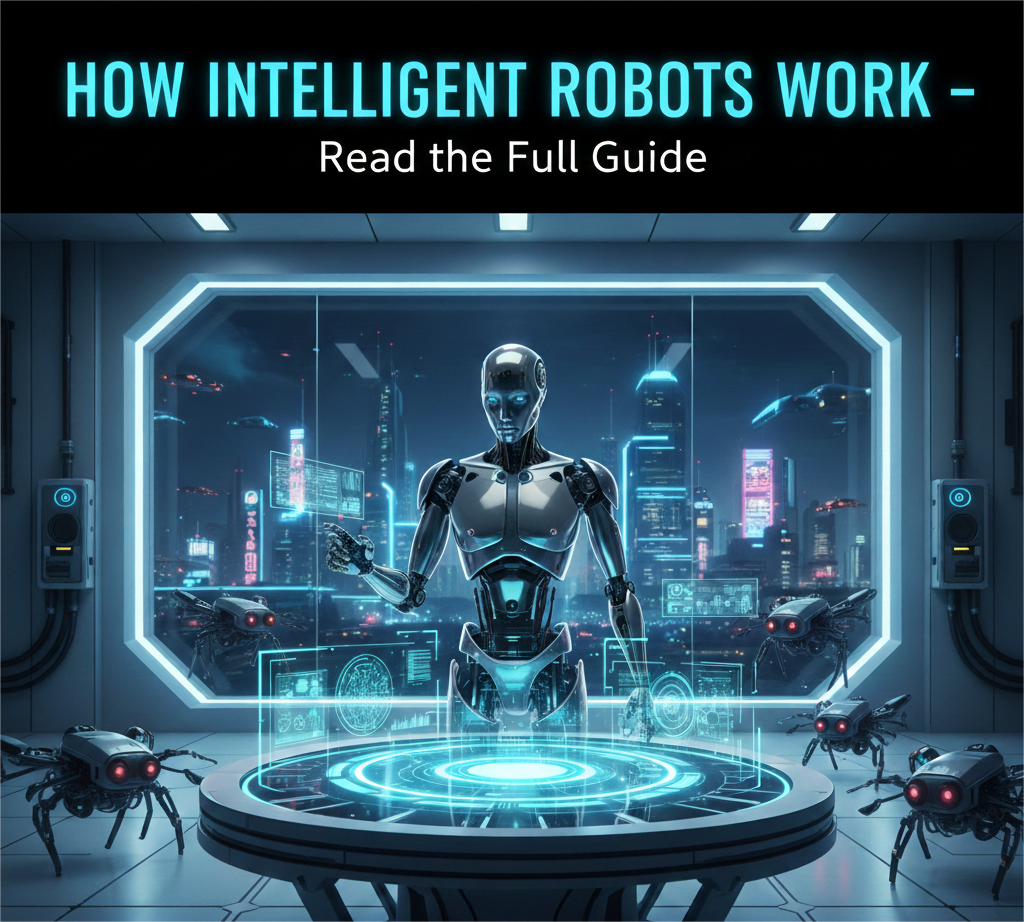
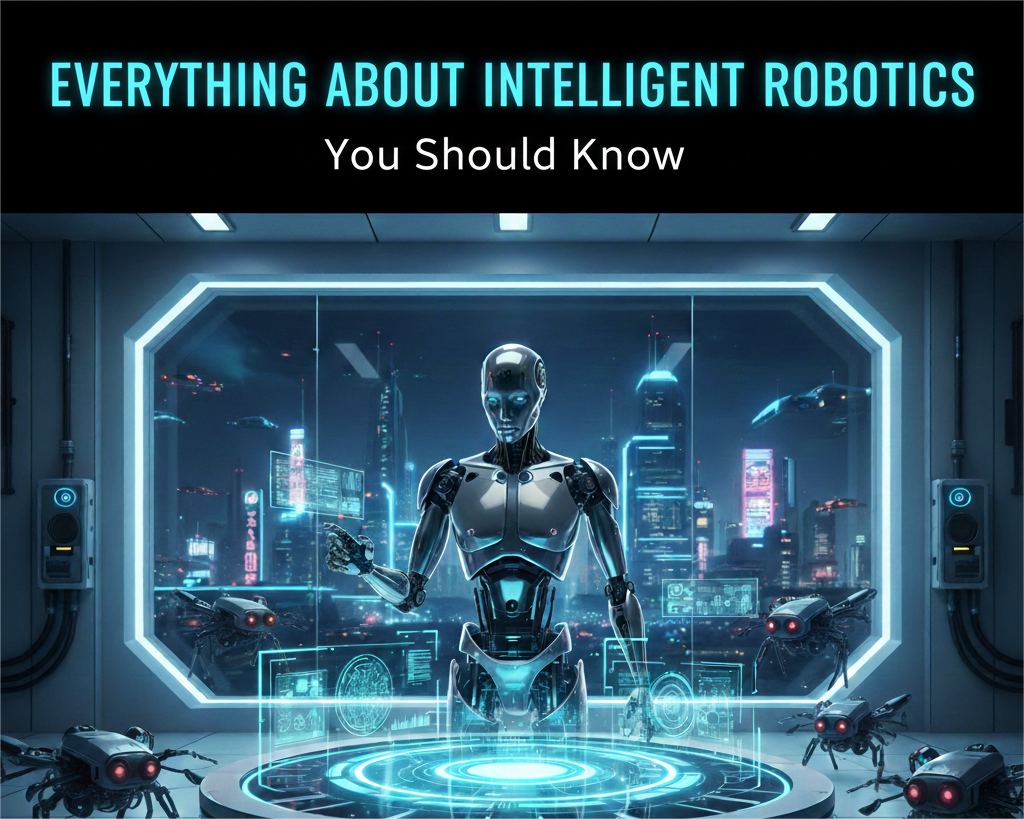
Intelligent robots are machines that can think and act smartly. They use sensors, software, and artificial intelligence to understand their surroundings. These robots can learn from data and improve over time. They do not just follow fixed commands. Instead, they make decisions on their own. This ability makes them different and more powerful than basic machines.
How Intelligent Robots Differ from Traditional Machines
Traditional machines work on simple rules. They do the same task again and again. Intelligent robots are more flexible. They can change actions based on situations. They can learn new tasks without full reprogramming. This makes them useful in complex environments. They are designed to adapt, not just repeat.
Why Intelligent Robots Matter Today
Role in Industry, Healthcare, and Daily Life
Intelligent robots are used in factories to speed up work. In healthcare, they help doctors and nurses. At home, they clean floors and assist people. They make life easier and safer. Robots can work in dangerous places. This reduces risk for humans.
Impact on Productivity and Innovation
Robots help companies work faster and better. They reduce errors and save time. Businesses can produce more with fewer resources. This leads to new ideas and innovation. Intelligent robots push technology forward. They help industries grow in smart ways.
Brief History of Robotics and Artificial Intelligence
Early Mechanical Robots
Early robots were simple machines. They were built to move in fixed ways. These robots had no thinking ability. They were used mainly in factories. Their job was to repeat tasks. Intelligence was not part of their design.
Evolution Toward AI-Driven Robots
With computers, robots became smarter. Artificial intelligence changed everything. Robots could now sense and learn. They started making decisions. Over time, robots became more human-like. Today’s robots use advanced AI models.
Core Components of Intelligent Robots
Hardware Components
Sensors (Vision, Touch, Sound, Proximity)
Sensors are the eyes and ears of robots. Cameras help robots see objects. Touch sensors help them feel pressure. Sound sensors allow hearing. Proximity sensors detect nearby objects. Together, sensors help robots understand the world.
Actuators and Motors
Actuators help robots move. Motors power arms and wheels. They convert signals into action. Without actuators, robots cannot act. These parts control speed and force. They are key to movement.
Power Sources and Energy Management
Robots need power to work. Some use batteries. Others use direct electricity. Energy management helps save power. Smart robots use energy efficiently. This allows longer working time.
Software Components
Operating Systems for Robots (ROS, Embedded Systems)
Robot operating systems control tasks. ROS helps manage sensors and movement. Embedded systems run simple programs. Software connects all robot parts. It allows smooth operation. Without software, hardware is useless.
Control Software and Algorithms
Algorithms guide robot behavior. They decide what action to take. Control software ensures accuracy. It manages speed and direction. Good algorithms make robots smarter. They reduce mistakes.
The Brain of the Robot
Processors and Microcontrollers
Processors handle heavy tasks. Microcontrollers manage simple actions. Together, they act as the robot’s brain. They process sensor data. They send commands to motors. Speed depends on processor power.
Edge Computing vs Cloud Computing
Edge computing happens inside the robot. Cloud computing uses the internet. Edge is fast and reliable. Cloud offers more power and storage. Many robots use both. This balance improves performance.
How Intelligent Robots Perceive the World
Sensor Technology Explained
Visual Sensors and Cameras
Cameras help robots see shapes and colors. They detect movement and objects. Vision is important for navigation. Robots use images to understand space. This helps them avoid obstacles.
LiDAR, Radar, and Ultrasonic Sensors
LiDAR uses lasers to measure distance. Radar uses radio waves. Ultrasonic sensors use sound. These sensors work in low light. They help robots map areas. They improve accuracy.
Sensor Data Processing
Data Collection and Filtering
Sensors collect a lot of data. Not all data is useful. Filtering removes noise. Clean data improves decisions. Processing happens quickly. Speed is very important.
Sensor Fusion for Accurate Perception
Sensor fusion combines data from many sensors. This gives a clearer picture. If one sensor fails, others help. Fusion improves reliability. Robots become more confident. Decisions become safer.
Environmental Mapping
Simultaneous Localization and Mapping (SLAM)
SLAM helps robots know where they are. It also builds maps. Robots update maps in real time. This is useful in unknown places. SLAM is key for navigation.
Object Recognition and Scene Understanding
Robots identify objects using AI. They recognize people and tools. Scene understanding helps predict movement. This helps robots act correctly. It improves interaction with humans.
Decision-Making in Intelligent Robots
Artificial Intelligence and Machine Learning
Supervised, Unsupervised, and Reinforcement Learning
Supervised learning uses labeled data. Unsupervised finds patterns alone. Reinforcement learning learns by rewards. Robots try actions and learn results. These methods help robots grow smarter.
Training Robots with Data
Robots need data to learn. Data comes from sensors and simulations. Training improves accuracy. Better data gives better results. Training takes time but is important.
Reasoning and Planning
Rule-Based Systems vs Learning-Based Systems
Rule-based systems follow fixed rules. Learning-based systems adapt. Modern robots prefer learning systems. They handle complex tasks better. They adjust to changes easily.
Path Planning and Task Scheduling
Path planning finds safe routes. Task scheduling organizes actions. Robots plan steps carefully. This saves time and energy. Planning avoids collisions.
Real-Time Decision Making
Handling Uncertainty and Dynamic Environments
Real environments change quickly. Robots face uncertainty. They must react fast. AI helps predict outcomes. Quick decisions improve safety.
Autonomous vs Semi-Autonomous Control
Autonomous robots work alone. Semi-autonomous robots need human help. Both have uses. Full autonomy suits simple tasks. Human control adds safety.
How Intelligent Robots Move and Act
Motion Planning
Kinematics and Dynamics
Kinematics studies movement. Dynamics studies forces. Robots use both to move smoothly. Calculations ensure balance. This prevents falls and damage.
Collision Avoidance Techniques
Robots detect obstacles early. They adjust paths quickly. Sensors help avoid crashes. Collision avoidance keeps humans safe. It is very important.
Actuation and Control
Feedback Control Systems
Feedback checks robot actions. Sensors report results. Corrections happen instantly. This improves accuracy. Feedback makes movement stable.
Precision, Speed, and Stability
Robots balance speed and accuracy. Too fast causes errors. Too slow wastes time. Stability keeps robots upright. Good control systems manage all three.
Manipulation and Interaction
Grippers and Robotic Arms
Robotic arms handle objects. Grippers hold items gently. They adjust force automatically. This prevents damage. They are common in factories.
Human-Robot Physical Interaction
Robots work near humans. Safety is critical. Soft movements reduce risk. Sensors detect contact. Interaction is becoming more natural.
Learning and Adaptation in Intelligent Robots
Continuous Learning
Learning from Experience
Robots learn from past actions. Success and failure matter. Experience improves future performance. Learning never stops. This makes robots smarter.
Updating Models Over Time
AI models improve with new data. Updates fix errors. Models stay relevant. Continuous updates are important. They help adapt to change.
Self-Improvement Mechanisms
Trial-and-Error Learning
Robots try different actions. Rewards guide learning. Errors teach lessons. This method is powerful. It builds independence.
Simulation-Based Training
Simulations are safe environments. Robots practice without risk. Training is faster. Mistakes cost nothing. Simulations save time and money.
Collaboration and Knowledge Sharing
Swarm Robotics
Swarm robots work together. They share tasks. Each robot is simple. Together, they are powerful. Nature inspires this idea.
Cloud-Based Learning Systems
Robots share data via cloud. One robot’s learning helps others. Knowledge spreads fast. This improves performance globally. Cloud learning is growing.
Communication and Human-Robot Interaction
Robot Communication Systems
Robot-to-Robot Communication
Robots share information. They coordinate actions. Communication improves teamwork. This is useful in factories. It increases efficiency.
Internet of Things (IoT) Integration
IoT connects robots to devices. Robots access sensors and data. Smart systems work together. Homes and cities benefit. Integration is seamless.
Human-Robot Interfaces
Voice Recognition and Natural Language Processing
Robots understand speech. NLP helps process language. Commands feel natural. Communication becomes easy. This improves user experience.
Touchscreens, Gestures, and Visual Cues
Touchscreens allow simple control. Gestures feel intuitive. Visual cues guide users. Interfaces are becoming user-friendly. Anyone can use robots now.
Social and Emotional Intelligence
Emotion Recognition
Robots detect emotions. Facial expressions matter. Tone of voice helps. This improves interaction. Robots respond kindly.
Building Trust with Humans
Trust is important. Predictable behavior helps. Safe actions build confidence. Friendly design matters. Trust increases acceptance.
Applications of Intelligent Robots
Industrial and Manufacturing Robots
Assembly Lines and Quality Control
Robots assemble products fast. They inspect quality. Errors are reduced. Production improves. Factories become smarter.
Collaborative Robots (Cobots)
Cobots work with humans. They share space safely. They assist rather than replace. Cobots are flexible. Small businesses benefit.
Healthcare and Medical Robotics
Surgical Robots
Surgical robots assist doctors. They improve precision. Recovery time reduces. Surgeries become safer. Results are better.
Elderly Care and Rehabilitation
Robots help elderly people. They remind me of medicine. Assist movement. Support independence. Care quality improves.
Service and Consumer Robots
Home Assistants and Cleaning Robots
Robots clean floors. Assist daily tasks. They save time. Homes stay organized. Life becomes easier.
Customer Service and Hospitality Robots
Robots greet customers. Answer questions. Provide directions. Service is faster. Businesses look modern.
Autonomous Vehicles and Drones
Self-Driving Cars
Self-driving cars use AI. They detect roads and traffic. Safety improves. Human error reduces. Future transport changes.
Delivery and Surveillance Drones
Drones deliver packages. They monitor areas. Access hard places. Speed is high. Efficiency improves.
Challenges and Limitations of Intelligent Robots
Technical Challenges
Data Quality and Bias
Bad data causes errors. Bias affects decisions. Training data must be fair. Quality matters a lot. Fixing bias is hard.
Hardware Limitations
Hardware wears out. Sensors fail. Repairs cost money. Power limits exist. Technology still improves.
Ethical and Social Issues
Job Displacement and Workforce Impact
Robots replace some jobs. New jobs also appear. Reskilling is needed. Balance is important. Society must adapt.
Privacy and Surveillance Concerns
Robots collect data. Privacy risks exist. Surveillance worries people. Rules are needed. Trust must be protected.
Safety and Reliability
Fail-Safe Mechanisms
Fail-safes stop robots safely. They prevent accidents. Safety systems are vital. Lives depend on them. Testing is required.
Regulatory Standards and Compliance
Laws control robot use. Standards ensure safety. Compliance is necessary. Regulations protect users. Global rules are developing.
The Future of Intelligent Robots
Emerging Technologies
Advanced AI and General Intelligence
AI is improving fast. General intelligence is the goal. Robots may think broadly. Research continues. The future is exciting.
Soft Robotics and Bio-Inspired Designs
Soft robots are flexible. Inspired by nature. They are safer. Useful in medicine. Design is changing.
Robots in Everyday Life
Smart Cities and Homes
Robots manage traffic. Clean cities. Assist homes. Life becomes smart. Technology blends naturally.
Personalized Robotic Assistants
Robots learn preferences. They assist personally. Custom help improves comfort. Everyone gets support. Personal robots grow popular.
Long-Term Societal Impact
Human-Robot Collaboration
Humans and robots work together. Strengths combine. Productivity increases. Collaboration is key. The future is shared.
Ethical Frameworks for the Future
Ethics guide development. Fair use matters. Human values come first. Frameworks ensure safety. Responsible innovation is needed.
Conclusion
Key Takeaways on How Intelligent Robots Work
Intelligent robots use sensors, software, and AI. They perceive, decide, and act. Learning improves performance. Communication enhances interaction. Robots are complex systems.
Why Understanding Intelligent Robots Is Important
Robots affect daily life. Understanding helps acceptance. Knowledge reduces fear. Informed users make better decisions. Awareness is power.
Final Thoughts and Next Steps for Readers
Robotics is growing fast. Learning now is smart. Stay updated with technology. Explore courses and news. The future includes robots.