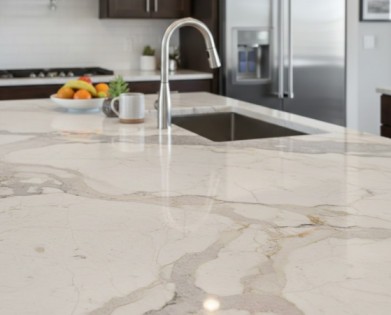

If there’s one thing that never goes out of style in kitchens and bathrooms, it’s marble countertops. Seriously, they’re the epitome of luxury and timelessness. Whether you’re hosting a dinner party or just brewing your morning coffee, marble adds that little touch of elegance to your space. But here’s the thing marble countertops come in all sorts of qualities, and not every slab is created equal. You might be wondering, how do you figure out whether you’re getting the good stuff or just paying extra for the name? Well, you’ve come to the right place. We’re going to break down the whole marble countertop grading system so you can get the best bang for your buck.
What Are Marble Countertop Grades?
Before we dive into pricing and costs, let’s first understand why marble countertops even have grades. Unlike engineered stones, marble is a natural material, meaning it comes with all sorts of unique variations—patterns, colors, and veining that make each slab special. The grading helps us figure out which pieces are the top-tier and which ones might be better suited for budget-friendly projects.
Why Marble Is Graded
You know that feeling when you find the perfect marble countertop? It’s not just about the color or pattern, though that’s part of it. It’s about the durability, the strength, and how well it’s been finished. Since marble countertops are made from natural stone, each piece is a little different in terms of strength, appearance, and even mineral content. The grading system helps separate the top-notch options from the more affordable ones, so you know what you’re getting.
So, when marble countertops are graded, it comes down to:
- Material hardness and density (This tells you how long your countertop will last before it shows wear and tear.)
- Visual consistency versus unique veining (More intricate veining means a more expensive price tag.)
- Thickness and structural integrity (Thicker slabs are more durable.)
- Finish quality (Whether it’s polished, honed, or textured, the finishing job makes a huge difference in price.)
In short, the grading system helps you figure out the aesthetic value and the long-term usability of your marble countertops.
Breakdown of Marble Grades
Now that you’ve got the basics down, let’s break it down. Whether you’re remodeling on a budget or splurging on your dream kitchen, knowing the difference between these grades will help you choose the right countertop for your needs.
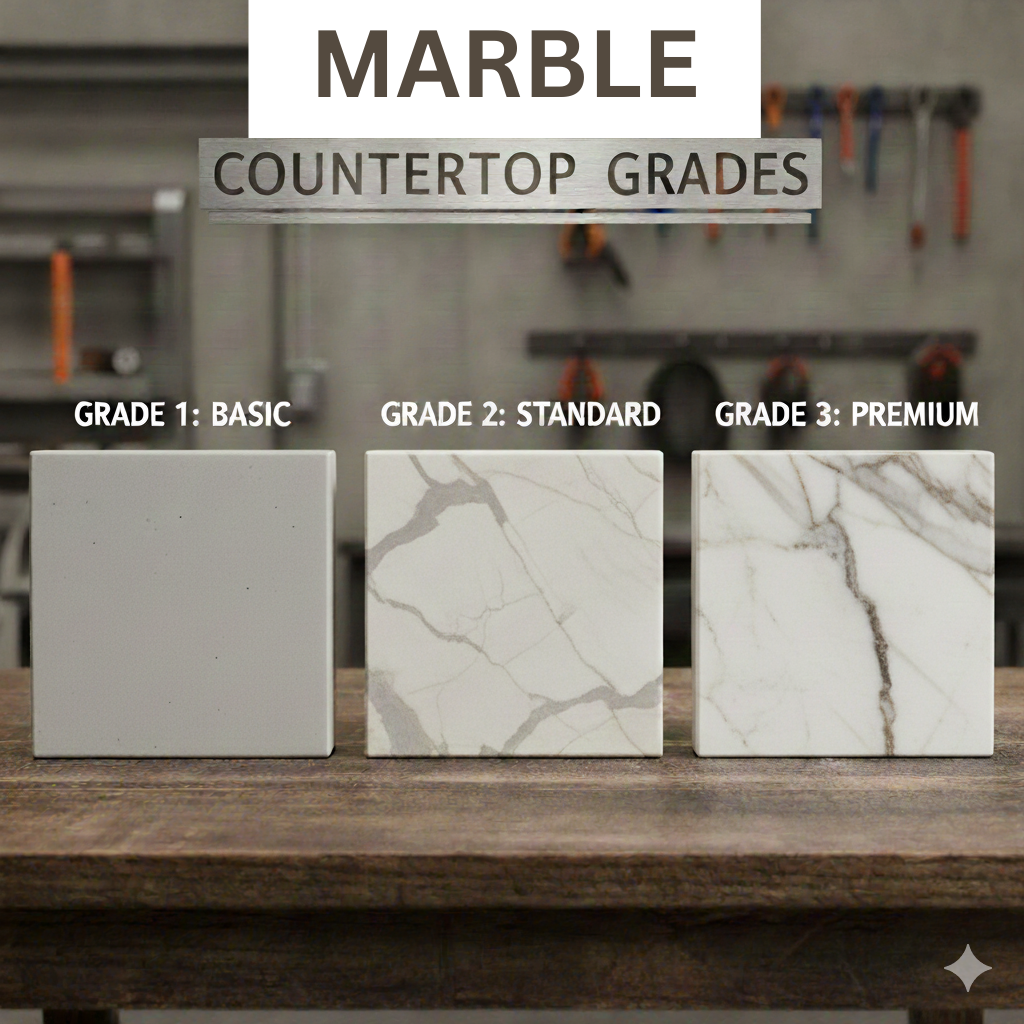
Level 1 – Entry-Level / Commercial Grade Marble
If you’re working with a tighter budget, Level 1 marble countertops are where you’ll find the most affordable options. These slabs are typically:
- Thinner (around 2cm thick, and often need plywood support)
- More uniform, with less intricate veining or color variation
- Mass-produced and usually imported from places like India or China
Pros: These are easy on the wallet, available everywhere, and still give your kitchen or bathroom that classic marble look.
Cons: Less unique, may need extra support, and the finish isn’t as polished as higher-grade options.
Level 2–3 – Mid-Grade Marble
Now we’re getting into the sweet spot for most homeowners. Mid-grade marble countertops are still affordable but offer better quality and more character. These slabs are typically:
- About 3cm thick, which makes them more durable
- Less uniform, with some subtle veining and unique patterns
- Smoother finishes, giving them a more high-end look without breaking the bank
Best For: Homeowners who want a solid, reliable option that still looks fabulous but doesn’t come with a designer price tag.
Popular Picks: Carrara Marble, Calacatta Marble, Statuario Marble
Level 4–7 – Premium / Exotic Marble
Here’s where the magic happens. Premium marble countertops are for those who want their kitchen or bathroom to stand out. These slabs are:
- Bold with dramatic veining and stunning color contrasts
- Heavier and denser, with fewer imperfections
- Finished to perfection, with a high-polish sheen that screams luxury
Ideal For: High-end kitchen renovations, luxury bathrooms, or anyone who wants their marble countertops to be a focal point.
Related Article: How to Clean Marble Countertops Without Damage
Factors That Influence Marble Grade and Cost
Not all marble countertops are priced the same, and it’s not just about how they look. Several factors go into determining the cost, and understanding these will help you know if you’re getting a good deal.
Origin of the Marble (Local vs. Imported)
The place where your marble comes from can really impact its price. Imported marble from places like Italy or France is usually much more expensive because of the rarity and transportation costs. On the other hand, marble from larger, well-known quarries in places like India or Turkey might be cheaper.
Thickness of the Slab
Standard marble countertops are typically 2cm thick, but when you move up to higher grades, you’re usually looking at 3cm or even 5cm slabs. Thicker slabs are more durable and provide that luxurious, heavy look.
Color and Veining Complexity
The more intricate and dramatic the veins, the higher the price tag. Simple, consistent patterns are usually less expensive, but unique patterns with bold veining or color contrasts—like Calacatta or Statuario are highly sought after and priced accordingly.
Finish and Surface Texture
The way the marble is finished can also make a difference. Polished surfaces are most common and affordable, but finishes like honed, leathered, or brushed take more work, and that adds to the cost.
Fabrication and Edge Style
Let’s not forget about the edges. Standard edges are fine, but if you want something more intricate, like ogee or bullnose edges, that’s going to come with a premium price. High-end marble countertops are often precision-cut to ensure seamless edges and crisp details.
How Much Should You Pay? Marble Grade vs. Budget
There’s a marble countertop for pretty much every budget. Your decision should depend on how much you’re willing to spend and what you’re planning to do with the countertops. Here’s a general breakdown to help you choose:
| Marble Grade | Average Cost per Sq. Ft. (Installed) | Best For | Long-Term Value |
| Level 1 (Basic) | $40 – $60 | Rentals, quick renovations, budget spaces | Moderate, Affordable, Less Unique |
| Level 2–3 (Mid-Range) | $60 – $100 | Family kitchens, standard remodels | High, Best cost-to-durability ratio |
| Level 4–7 (Premium / Exotic) | $100 – $250+ | Luxury kitchens, designer spaces | Exceptional, A statement piece |
When Is Premium Marble Worth It?
- Forever Home: If you’re planning to stay long-term, investing in a durable, stunning marble countertop is a no-brainer.
- Selling Soon?: If you’re flipping or selling soon, mid-range marble countertops tend to offer the best ROI without overdoing it.
- Rentals or Secondary Spaces: For a rental or secondary space, a budget-friendly marble countertop makes the most sense financially.
How to Identify Genuine Marble Quality When Buying
Choosing the right marble countertop is about more than just picking something that looks good, it’s about ensuring you’re getting the right quality. Here’s how to check if your marble is the real deal:
Questions to Ask Your Supplier
Don’t be afraid to ask your supplier these key questions:
- What grade is this marble, and why?
- Is it a 2cm or 3cm slab?
- Has it been pre-sealed, or will it require sealing after installation?
- Where is this marble sourced from?
A reputable supplier should have no problem answering these and even providing documentation if needed.
Simple Physical Tests You Can Perform
You don’t need to be an expert to check if your marble countertops are high-quality. Try these simple tests:
- Scratch Test: Real marble is scratch-resistant. If your coin or key leaves a mark, it’s probably not real marble or it’s a lower grade.
- Water Absorption Test: Drop a little water on the surface. If it darkens quickly, it’s porous, and you’re likely looking at lower-grade marble.
- Heat Test: Place a hot pot or pan on the countertop. Genuine marble won’t scorch easily, unlike lower-quality versions.
Watch Out for Counterfeit Marble Lookalikes
Some retailers might try to pass off laminate or engineered stone as real marble. If the surface feels too perfect or too smooth, it’s likely a fake. Always double-check to ensure you’re getting the real thing.
Conclusion
Choosing the right marble countertop is more than just picking a pretty surface. It’s an investment in your home’s value, aesthetics, and functionality. Whether you’re going for a budget-friendly, entry-level option or splurging on a luxurious, exotic stone, make sure your choice fits your needs and your budget. Mid-range marble countertops offer the best balance between price and durability, while premium ones can turn your space into a showstopper. By understanding the grading system, you’ll be able to make an informed decision that’s all about long-term value.