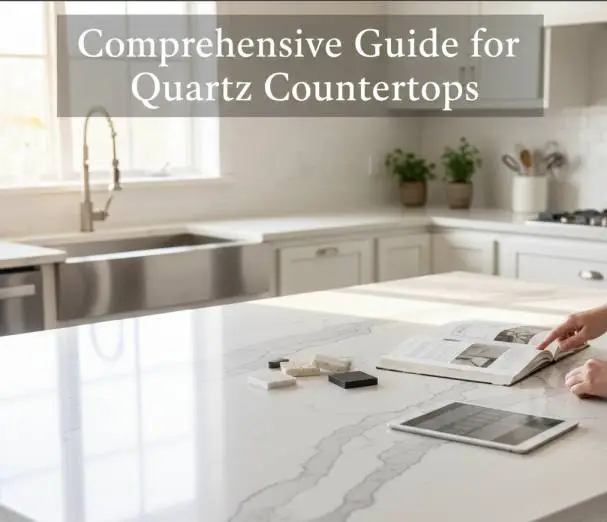
Quartz countertops have grown into a popular choice for modern kitchens and bathrooms because they offer both strength and style. They hold up well in busy spaces and still give the room a clean, updated look. Homeowners enjoy their clean appearance, high performance, and the calmness of not having to worry about a staining surface, and the fact that they do not have to maintain it as much. Quartz countertop has both a blend of beauty and longevity that suits the design of nearly all homes, whether you are designing a complete renovation or merely a countertop change.
This guide covers all the information you should know prior to selecting the quartz, their colors and prices, and their installation and maintenance, to make a successful and knowledgeable choice.
What Are Quartz Countertops?
Quartz countertops are made from engineered stone, which means they’re created by combining crushed natural quartz with resin, polymers, and color pigments. Most of the material is real quartz, usually around 90 to 95 percent. The remaining portion is made up of binders that hold everything together and give the slab its strength and shape.
These slabs are produced under controlled conditions, and this enables the manufacturers to realize consistency and smooth finish patterns, as well as a vast color variation. Quartz countertops are uniform and predictable in design as opposed to the natural stone,s which differs on a slab-to-slab basis.
Why Quartz Is Engineered
The engineered nature of quartz countertops delivers several advantages:
- More control over colors
- Improved stain resistance
- Zero porosity
- Better durability under daily use
- Flexibility in pattern creation
Because of these engineered properties, quartz countertops perform better in busy kitchens and bathrooms where spills, moisture, and heat are common.
Types of Quartz Countertops
Quartz countertops are available in diverse patterns, styles, and finishes. This variety enables the house owners to select a surface that matches their specific taste, either a clean and simple appearance, or something bright and attractive.
1. Polished Quartz Countertops
The most popular quartz countertop finish is the polished finish. It provides a glossy finish that is smooth and reflects light and illuminates the kitchen. Such a finish gives more depth of color and makes the pattern more noticeable. Polished quartz is also suitable for homeowners who want their kitchen to look clean and luxurious, as it provides the kitchen with a luxurious and high-class feel.
The benefits of polished quartz countertops are:
- Shiny surface that enhances light
- Easy to clean because spills wipe off smoothly
- Richer appearance with deeper color tones
- Works well in modern and classic interiors
2. Matte or Honed Quartz Countertops
Honed quartz countertops are an excellent choice if you want a softer and more subdued appearance. This finish eliminates the shine and leaves the surface with a smooth velvety feel. The most popular quartz is mined to a mirror finish, which suits minimalist kitchens, or old-fashioned, farmhouse-like styles.
Homeowners choose honed quartz because it:
- Gives the kitchen a natural and relaxed feel
- Reduces reflection from overhead lighting
- Perfect for subtle, elegant interiors
This finish does not affect the durability of the stone, and the surface remains just as strong and non-porous as polished quartz.
3. Veined Quartz Countertops
The veined quartz countertops resemble the look of natural marble. They are characterized by smooth lines, flowing design, and elegant motion all over the slab. It is the best one to use for people who live at home and are afraid of having a marble-like appearance, but are not afraid of stains and etching.
Common veining styles include:
- Thin, subtle veining for a gentle, classic look
- Bold, dramatic veining for modern luxury kitchens
- Warm-toned veining for traditional interiors
- Cool-toned veining for contemporary spaces
Veined quartz is one of the most versatile design choices because it blends well with both neutral and bold color palettes.
4. Solid Color Quartz Countertops
Solid-color quartz countertops are plain and simple, with no patterns or movement. These slabs come in white, black, gray, beige, and other modern colors.
It is best suited for:
- Minimalist kitchens
- Commercial spaces
- Contemporary designs
- Small kitchens where clean surfaces help open the space
Solid quartz provides a smooth and uniform appearance that works well when you want other elements, like cabinets or backsplashes, to stand out.
5. Textured Quartz Countertops
Certain quartz countertops come with a rough finish that resembles natural stone or concrete. These surfaces are targeted at consumers who desire a more organic and touchable appearance. The quartz with a textured finish gives the kitchen a style and transforms the counter-top into the central part of the kitchen.
Popular textured styles are:
- Lightly embossed textures
- Concrete look finishes
- Rough or leathered feel
Even with the added texture, quartz maintains its durability, stain resistance, and low maintenance features.
Benefits of Quartz Countertops
Quartz countertops are no exception since they have become a leading trend among homeowners, not necessarily because of their beauty but also because of the spectrum of functional advantages they come with. Quartz will be beneficial to the kitchen, bathroom, and other spaces in the house because of its durability and design flexibility.
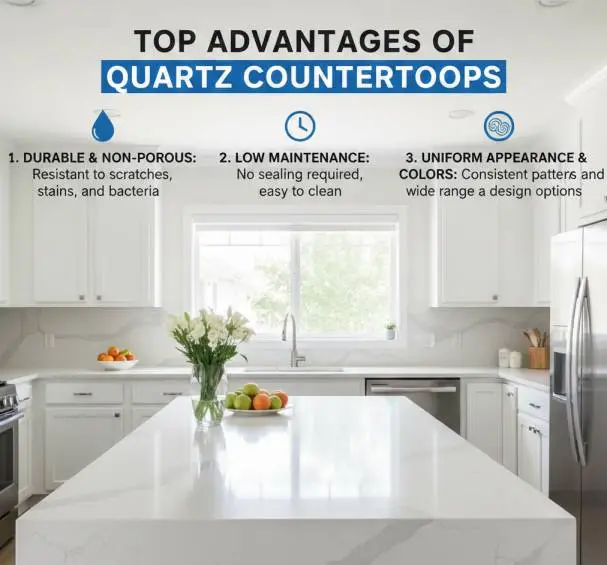
1. Non-Porous and Hygienic Surface
Quartz countertops have a non-porous surface, which is one of the most valuable advantages. Quartz also does not absorb liquids like natural stone, thus it is very resistant to coffee, wine, oil, and other liquids that tend to be left in the kitchen. The significance of this is that bacteria do not reproduce on quartz countertops, thus ensuring that the surfaces are hygienic and safe to prepare food.
They also lower the chances of the presence of mold and mildew in high-moisture areas. Compared to other natural stones, quartz does not need sealing, polishing, or special treatments, and thus it is a convenient option for homeowners. The surface is non-porous and can be easily cleaned very fast; this is particularly very convenient for busy households. This is an advantage of hygiene, which is particularly useful in kitchens and bathrooms where food preparation and water exposure are the norm.
2. Exceptional Durability and Strength
Quartz is a stone that is designed to be very tough. Quartz is among the hardest minerals found on the earth, and when mixed together with resin, the slabs are quite resistant to scratches, chips, and cracks. They can be used in hard usage in the kitchen, such as cutting, chopping, and positioning of the appliances. They are also smooth to the touch, even when used frequently. Quartz is a good investment as it is long-term reliable.
This makes quartz one of the best options for families, chefs, and high-traffic kitchens where the surfaces are required to withstand daily wear and tear.
3. Easy Maintenance
The other major point that highlights the advantages of quartz countertops is their low-maintenance nature. Unlike granite or marble, quartz does not need yearly sealing or polishing to stay strong, usable, and attractive.
You just have to:
- Wipe daily with mild soap and warm water
- Avoid abrasive cleaners and harsh chemicals
- Use trivets for hot cookware and cutting boards for knives
The easy maintenance makes quartz countertops a practical option for busy homeowners who want a beautiful surface without the hassle of ongoing care.
4. Wide Range of Colors and Designs
Quartz has become a favorite mostly because you can get it in so many different looks. You’re not limited to whatever nature provides. If you want something that feels like marble, you’ll find it.
If you prefer a clean, simple color with no pattern at all, that’s available too. Some people even go for slabs with soft veins that add a bit of movement without taking over the whole room. Lately, textured finishes are getting more attention since they make the surface feel a little more natural and warm.
With all these choices, it’s pretty easy to match quartz with whatever style you already have in your kitchen or bathroom. It works just as well in a modern setup as it does in a more traditional one.
5. Long-Term Value
Another reason quartz stands out is its long-term value. It lasts a long time, doesn’t ask for much upkeep, and keeps looking good even when a kitchen gets a lot of use. You don’t have to worry about constant sealing or repairs, which already saves time.
A few things help boost its value. It stays in good condition for decades if you take basic care of it. Buyers usually like seeing quartz in a home, so it can help during resale. Plus, you’re not spending money on replacements or frequent fixes.
When you put everything together, quartz ends up being a solid investment. It looks good, it holds up well, and it saves you effort over the years.
Quartz Countertops Installation Process
Installing quartz countertops correctly is crucial to ensure durability, functionality, and aesthetic appeal. While quartz slabs are designed for long-lasting performance, improper quartz countertop installation can compromise their strength and finish.
1. Measurement and Template Creation
Before installing quartz countertops, the space needs careful measuring. Installers take detailed measurements of every spot where the slab will go, including corners, sinks, and islands. They use these measurements to make templates that match the layout of the room.
Getting the numbers right is important because even a small mistake can lead to uneven edges or gaps. Accurate measurements make the installation smoother and reduce the chance of wasting material.
2. Slab Selection
After the measurements are done, the next step is choosing the quartz slabs that will actually go into the space. This choice matters because the color, pattern, finish, and even the thickness can change how the whole kitchen or bathroom looks. Some people like a polished surface with more shine, while others prefer honed or textured finishes for a softer feel. Veining also plays a role in how the quartz slabs blend with the rest of the room.
Picking the right slab keeps everything looking consistent and helps make sure the countertop stays durable over time. It also prevents issues like mismatched patterns or colors that don’t work well together. Professional guidance during this step helps avoid mismatched patterns or unsuitable colors that could detract from the final result.
3. Fabrication and Cutting
Once the slab is selected, it moves to fabrication, where it is cut to match the precise templates. This includes shaping openings for sinks, faucets, stovetops, or other fixtures. During this stage, the edges are also crafted according to the selected profile, and many homeowners prefer an Eased Edge Countertop for its clean, modern look along with other options like beveled, bullnose, ogee, or waterfall.
Using specialized tools, such as water-jet saws, ensures quartz countertops are cut cleanly without chipping or cracking. Accurate fabrication is essential for a seamless installation and guarantees that the slabs fit perfectly into the prepared space.
4. Placement and Leveling
After fabrication, the slabs are carefully moved and positioned on the cabinets and supports. Installers check for level alignment, making precise adjustments to ensure the countertop sits flat and stable. Proper leveling is critical because even minor misalignments can affect the usability and longevity of quartz countertops. This step also ensures that any islands, corners, or multi-piece installations are perfectly aligned, providing a polished, professional finish.
5. Seams and Finishing Touches
For countertops that require more than one slab, seams are carefully aligned to match patterns, colors, and veining. High-quality adhesives are used to bond the slabs, creating nearly invisible seams. Installers then perform final polishing and cleanup, smoothing edges and surfaces to ensure a flawless appearance.
Attention to detail at this stage ensures that the quartz countertops are both visually seamless and structurally secure, enhancing the overall look and durability.
6. Final Inspection and Handover
The last step in the installation process is a thorough inspection. Professionals verify that surfaces are level, seams are properly aligned, edges are polished, and the overall quality meets high standards. Only after confirming these details are homeowners handed over their new quartz countertops.
This final inspection guarantees that the countertops are ready for immediate use, providing a durable, hygienic, and stylish surface for everyday kitchen or bathroom activities.
Why Professional Installation Matters
While DIY installations may seem tempting, quartz countertops are heavy and require precise cutting, leveling, and sealing. Professional installation ensures:
- Proper handling of heavy slabs
- Correct alignment of patterns and seams
- Safe installation that prevents cracks or chips
- Long-term durability and aesthetic appeal
Investing in expert installation guarantees that your quartz countertops remain both beautiful and functional for decades.
Quartz Countertops Cost
Understanding the cost of quartz countertops is essential before planning a kitchen or bathroom renovation. Prices vary depending on factors like brand, color, slab thickness, and installation complexity.
Average Price Range
The price of quartz countertops generally ranges from $60 to $150 per square foot, including installation, though premium designs or complex projects can cost more. Standard colors and simple finishes tend to be on the lower end, while marble-look, veined, or textured slabs are typically more expensive. Larger kitchens with islands or multiple cutouts will also increase the overall cost.
Factors That Affect Quartz Countertop Pricing
Several factors influence the final price of quartz countertops, from the quality of the slab to the complexity of installation. Understanding these elements helps homeowners plan their budget effectively.
Brand and Quality
The brand and quality of quartz countertops significantly affect pricing. Premium brands use higher-quality quartz and resins, offering better durability, color consistency, and longer warranties, ensuring the surface remains visually appealing and reliable for years.
Color and Design Complexity
The design and color of quartz impact cost. Solid colors are more affordable, while veined, marble-look, or textured patterns require precise fabrication and additional labor, increasing the price. Homeowners should balance aesthetics with budget.
Slab Thickness
Quartz slabs usually come in 2 cm (3/4 inch) or 3 cm (1 1/4 inch) thickness. Thicker slabs are more durable and luxurious but more expensive, affecting both material and installation costs.
Fabrication and Cutouts
Custom cutouts for sinks, faucets, and stovetops, as well as complex edge profiles like ogee or waterfall, add to fabrication costs. Detailed shaping enhances the look but requires extra time and expertise.
Installation Complexity
Installation costs rise with layout complexity. Simple, straight installations are cheaper, while corners, islands, or multi-piece countertops need more labor, skill, and precision to ensure durability and proper alignment.
Maintenance and Care Tips for Quartz Countertops
One of the main advantages of quartz countertops is their low-maintenance nature, making them ideal for busy kitchens and bathrooms. Unlike granite or marble, quartz does not require sealing, polishing, or special cleaners to maintain its durability and shine.
1. Daily Cleaning
Daily cleaning of quartz countertops is simple and quick. Using a soft cloth or sponge with warm water and mild dish soap is sufficient to remove crumbs, spills, and stains. Avoid abrasive scrubbers that can dull the surface.
Microfiber cloths are especially effective for streak-free cleaning. Promptly wiping spills prevents residue buildup and keeps the countertops looking polished and hygienic.
2. Avoid Harsh Chemicals
While quartz is durable, strong chemicals can damage the resin or finish over time. Products containing bleach, ammonia, or harsh acids should be avoided. If stronger cleaning is needed, opt for non-abrasive, pH-balanced household cleaners and rinse thoroughly with water. Following this guidance ensures that quartz countertops retain their natural luster and appearance for years.
3. Prevent Heat Damage
Although quartz countertops are moderately heat-resistant, excessive heat can damage the resin. Always use trivets, heat pads, or pot holders under hot cookware, appliances, or skillets. Avoid placing open flame cookware directly on the surface. These precautions protect both the appearance and integrity of the countertops, ensuring long-term durability.
4. Prevent Scratches
Quartz is highly scratch-resistant but not completely scratch-proof. Using cutting boards is essential when chopping or slicing. Avoid dragging heavy or rough objects across the countertop, and place soft pads under appliances when moving them. These simple steps help maintain the smooth, polished surface of quartz countertops.
5. Handling Stains
Quartz countertops resist most stains, but prolonged exposure to highly pigmented liquids like coffee, wine, or tomato sauce can leave marks. Wipe spills immediately with a soft cloth. For stubborn stains, a mild, non-abrasive cleaner or a solution of warm water and vinegar can be used. Aggressive scrubbing should be avoided to prevent surface damage.
6. Long-Term Maintenance Tips
Regularly inspect seams and edges for minor issues. Avoid harsh scrapers or metal pads on the surface, and consult a professional if any chips or cracks appear. These long-term precautions ensure that quartz countertops remain functional, hygienic, and visually appealing for decades.
Why Quartz Countertops Are Easy to Maintain
Unlike other natural stones that require ongoing care, quartz countertops provide a low-maintenance, durable, and hygienic surface. Their resistance to stains, scratches, and moisture, combined with easy daily cleaning, makes them a practical choice for modern kitchens and bathrooms. Homeowners can enjoy their beauty and performance without extensive upkeep, making quartz a reliable and stylish investment.
Conclusion
Quartz countertops offer the perfect combination of beauty, durability, and low maintenance, making them one of the most popular choices for modern kitchens and bathrooms. From non-porous surfaces that resist stains and bacteria to a wide range of colors and designs, quartz provides both practicality and style.
With proper installation and simple everyday care, quartz countertops can last for decades while maintaining their polished, elegant appearance. Whether you want a marble-look design, solid color, or veined pattern, quartz delivers consistent quality and long-term value. For homeowners seeking a reliable, stylish, and functional surface, quartz countertops remain an ideal investment that enhances both the home’s aesthetic and resale value.
FAQs
1. Are quartz countertops durable for daily kitchen use?
Yes. Quartz countertops are highly durable, resisting scratches, cracks, and chips. They are engineered from natural quartz and resin, making them ideal for heavy daily use in kitchens while maintaining their polished, elegant appearance for years without frequent maintenance.
2. Do quartz countertops require sealing?
No. Unlike granite or marble, quartz countertops are non-porous and do not require sealing. Their natural resistance to moisture, stains, and bacteria makes them low-maintenance, allowing homeowners to enjoy a hygienic, worry-free surface with simple cleaning using mild soap and water.
3. Can quartz countertops handle heat?
Quartz countertops are moderately heat-resistant, but direct contact with hot pots or open flames can damage the resin. Using trivets, hot pads, or coasters protects the surface, maintaining both its durability and polished appearance for long-term kitchen use.
4. How do I clean quartz countertops effectively?
Daily cleaning is simple with a soft cloth, sponge, warm water, and mild dish soap. Avoid harsh chemicals, abrasive scrubbers, or bleach. For stubborn stains, use a gentle non-abrasive cleaner to keep quartz countertops shiny, hygienic, and damage-free.
5. Are quartz countertops more expensive than granite or marble?
While quartz countertops can have a higher upfront cost than some granite or marble options, they offer long-term value with low maintenance, durability, consistent design, and stain resistance, making them a smart investment for homeowners seeking both style and practicality.