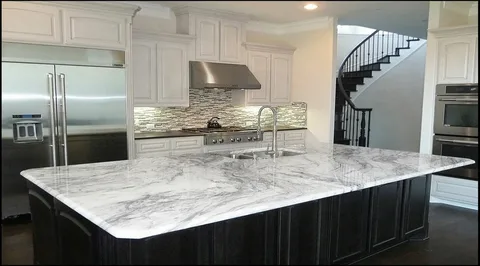
Choosing the countertop is a crucial decision in any kitchen or bathroom renovation. It affects both the functionality and the aesthetics of the area. Countertops serve purposes, including cleaning, cooking, and hosting guests. Therefore, contemporary homeowners dedicate more effort to researching materials.
Quartzite countertops have gradually become more favored among stone selections. They are often valued for their durability, elegance, and ability to elevate a space without seeming too fragile. Nonetheless, quartzite is one of the misunderstood materials often confused with quartz or assumed to perform like marble.
This guide provides a clear and useful breakdown of quartzite. It focuses on how quartzite functions in real homes, what kind of maintenance it requires, and whether it actually fits your lifestyle rather than promoting hype.
What Are Quartzite Countertops?
Quartzite countertops originate from quartzite, a natural rock initially formed as sandstone. Below the Earth’s crust, sandstone undergoes extreme heat and pressure for millions of years. This natural process makes the sand grains bond firmly, creating quartzite, a compact rock, tough and abundant in natural quartz.
Due to this transformation, quartzite turns significantly tougher than the sandstone it is formed from. This durability is a factor that attracts homeowners to Quartzite Countertops, particularly in kitchens and other frequently used spaces. The stone endures use and offers superior scratch resistance compared to numerous other natural surfaces, and maintains its integrity over the years.
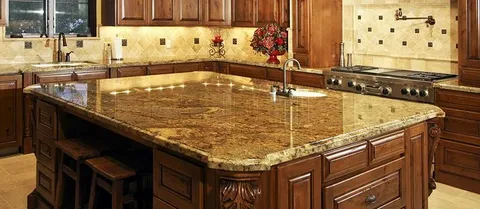
Because quartzite is entirely natural, every slab narrates its unique tale. Some exhibit flowing veins, whereas others display striking motion or delicate mineral specks. The color spectrum includes whites and pale grays as well as warmer creams, blues, and natural, earthy shades. Each slab is distinct, making every countertop truly one-of-a-kind in appearance.
This natural origin is also what sets Quartzite Countertops apart from engineered surfaces. Unlike quartz, which is manufactured using crushed stone and resins, quartzite is left in its natural state. It contains no added pigments or synthetic binders, allowing the stone’s true character to shine through. The result is a surface that feels authentic, solid, and naturally elegant, offering both visual appeal and long-term performance.
Quartzite vs Quartz: Why the Names Cause Confusion
One of the most common reasons homeowners feel uncertain about Quartzite Countertops is the confusion between quartzite and quartz. While the names sound similar, the materials themselves are quite different in how they are made, how they look, and how they perform over time.
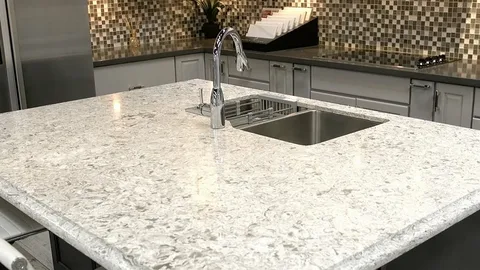
Quartz is an engineered material. It is manufactured using crushed natural quartz mixed with resins and pigments. This process allows quartz slabs to have consistent colors and patterns, which many homeowners appreciate for modern or uniform designs. Because of the added resins, quartz is non-porous and does not require sealing.
Quartzite, on the other hand, is a completely natural stone. It is quarried directly from the earth and shaped into slabs without synthetic additives. This natural formation is what gives Quartzite Countertops their organic patterns, depth, and variation. Each slab has its own unique veining and movement, which cannot be replicated by engineered materials.
Another key difference lies in durability and heat resistance. Quartzite is naturally hard and performs exceptionally well in high-heat environments, such as busy kitchens. Quartz, while durable, can be sensitive to excessive heat due to the resins used in its composition.
Maintenance is also different. Quartz requires very little upkeep, while quartzite needs periodic sealing to protect its surface. However, many homeowners are willing to accept this small amount of maintenance in exchange for the natural beauty and strength that quartzite offers.
Understanding these differences helps you make an informed decision rather than choosing based on name alone.
Popular Types and Styles of Quartzite Countertops
One of the reasons Quartzite Countertops appeal to so many homeowners is the wide variety of styles available. Quartzite is not a single look or color. Each type has its own character, level of movement, and overall feel. Some slabs are calm and understated, while others are bold and dramatic.
Knowing about the most popular quartzite styles can help you narrow down what works best for your space.
Taj Mahal Quartzite
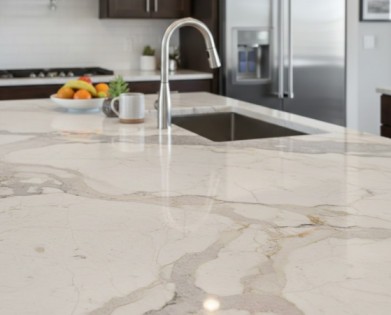
Taj Mahal quartzite is one of the most sought-after options, especially for kitchens. It features soft beige, cream, and light gray tones with gentle veining. The overall look is warm, elegant, and easy to pair with both light and dark cabinetry.
Many homeowners choose Taj Mahal Quartzite Countertops because they offer a luxurious appearance without overwhelming the space. It works particularly well in transitional and classic kitchen designs.
White Macaubas Quartzite
White Macaubas quartzite is known for its clean background and linear gray veining. The lines often run horizontally, giving the stone a structured and modern feel.
This type of quartzite is popular in contemporary kitchens and bathrooms where homeowners want a bright, refined surface that still feels natural. White Macaubas Quartzite Countertops pair well with sleek cabinetry, minimalist designs, and stainless steel finishes.
Cristallo Quartzite
Cristallo quartzite stands out because of its translucent quality. In certain applications, it can even be backlit, creating a striking visual effect.
This type of quartzite is often used as a statement piece rather than a subtle background element. Cristallo Quartzite Countertops are commonly seen in luxury kitchens, bars, or accent islands where the stone itself becomes the centerpiece of the design.
Blue Roma Quartzite
For homeowners who want something bold, Blue Roma quartzite offers rich movement with shades of blue, gray, gold, and cream. Each slab has dramatic variation, making it ideal for feature countertops or waterfall islands.
Blue Roma Quartzite Countertops work best when the surrounding design is kept simple, allowing the stone to take center stage.
Choosing the Right Style for Your Space
When selecting quartzite, it’s important to view full slabs rather than small samples. The movement and color variation can look very different across a larger surface.
The right choice depends on how much visual activity you want in the space. Subtle quartzite blends into the design, while dramatic slabs create impact. Both options perform equally well, so the decision is largely aesthetic.
Are Quartzite Countertops Good for Kitchens? Real-World Performance
Kitchens are the most demanding spaces in a home. Countertops face daily cooking, spills, heat, and constant cleaning. Because of this, many homeowners wonder whether Quartzite Countertops are truly suitable for such heavy use or if they are better reserved for show kitchens.
In real-world settings, quartzite performs very well in kitchens when it is properly installed and sealed. Its natural hardness allows it to handle routine activities like food preparation, moving cookware, and occasional contact with utensils without showing visible wear.
- Quartzite is harder than marble and resists scratches more effectively. While no surface is completely damage-proof, quartzite stands up well to everyday use. Accidental bumps from pots or small kitchen tools are unlikely to chip the stone. This strength makes Quartzite Countertops a comfortable choice for households that cook frequently, rather than treating the kitchen as a purely decorative space.
- Like most natural stones, quartzite is porous to some degree. This means spills should not be left sitting for long periods. However, when sealed properly, quartzite resists most common kitchen stains from coffee, tea, oil, sauces, and juice. Routine cleaning and quick wipe-ups are usually enough to keep Quartzite Countertops looking clean and polished. For homeowners willing to follow simple care habits, staining is rarely a serious concern.
- One of quartzite’s strongest advantages in kitchens is heat resistance. Hot pans, baking sheets, or cookware placed briefly on the surface typically do not cause damage. This gives homeowners more flexibility during cooking compared to surfaces that contain resins. While using trivets is still recommended as a best practice, Quartzite Countertops are forgiving in real kitchen situations where not every hot item is set down carefully.
- Over time, quartzite tends to age well. It does not easily lose its polish or structure, and its natural patterns help mask minor wear that might occur over the years.
Using Quartzite Countertops in Bathrooms and Other Areas
While kitchens often get the most attention, Quartzite Countertops work just as well in other parts of the home. Their durability and natural appearance make them a versatile option for bathrooms, laundry rooms, and even decorative features.
Quartzite Countertops in Bathrooms
In bathrooms, quartzite brings a clean, refined look that feels both calm and upscale. It works especially well for vanity tops, where it can handle daily exposure to water, cosmetics, and cleaning products when sealed properly.
Unlike softer stones, quartzite holds its structure over time and resists surface damage. This makes Quartzite Countertops a practical choice for shared or high-use bathrooms. The stone’s natural patterns also add visual depth, turning a simple vanity into a design feature without feeling excessive.
Moisture resistance is another advantage. When sealed, quartzite performs well in humid environments, maintaining its finish and color without warping or swelling.
Laundry Rooms and Utility Spaces
Laundry rooms often face spills from detergents, water splashes, and cleaning products. Quartzite can handle these conditions with ease, provided the surface is sealed and cleaned regularly.
Using Quartzite Countertops in utility areas adds durability while maintaining a cohesive look throughout the home, especially when the same stone is used in multiple spaces.
Accent Features and Decorative Applications
Beyond flat surfaces, quartzite is frequently used for design features. Homeowners and designers use it for waterfall islands, backsplashes, fireplace surrounds, and feature walls.
In these applications, quartzite’s natural movement becomes a focal point. Bookmatched slabs, where mirrored patterns are placed side by side, are especially popular for dramatic visual impact.
Why Quartzite Works Across Different Spaces
The reason quartzite adapts so well is its balance of form and function. It offers the strength needed for practical areas while delivering the visual appeal required for decorative features.
Whether used in a kitchen, bathroom, or accent wall, Quartzite Countertops bring consistency, durability, and natural beauty throughout the home.
Polished vs Honed Quartzite Countertops: Choosing the Right Finish
When selecting Quartzite Countertops, the finish plays an important role in how the stone looks and feels in your space. While the stone itself remains the same, the surface finish can change its appearance, maintenance needs, and overall impact on the design.
The two most common finishes for quartzite countertops are polished and honed. Each has its own advantages, depending on your lifestyle and aesthetic preference.
Polished Quartzite Countertops
A polished finish gives quartzite a smooth, glossy surface that reflects light. This finish enhances the stone’s natural colors and veining, making patterns appear more defined and vibrant.
Polished Quartzite Countertops are often chosen for kitchens because they are easier to clean. The smooth surface helps repel moisture and stains slightly better than a honed finish. Spills tend to sit on the surface longer, giving homeowners more time to wipe them away.
This finish works well in modern, transitional, and luxury spaces where brightness and visual clarity are desired.
Honed Quartzite Countertops
A honed finish creates a matte, satin-like surface. It has a softer, more natural look that feels understated and relaxed. Many homeowners prefer honed quartzite for spaces where they want a more organic or casual appearance.
Honed Quartzite Countertops may show fingerprints, water marks, or smudges more easily than polished surfaces, especially in darker stones. However, some homeowners appreciate this lived-in look, as it adds character over time.
This finish is often used in bathrooms and kitchens with a rustic or minimalist style, or spaces where glare from lighting is a concern.
Which Finish Is Better?
There is no single right answer. Polished finishes are practical and visually striking, while honed finishes offer a softer, more subtle appearance.
The best choice depends on how the space is used, how much maintenance you are comfortable with, and the overall design direction of your home. Both options perform well when properly sealed and cared for.
Cost of Quartzite Countertops and What Affects Pricing
The cost of Quartzite Countertops can vary widely, which often raises questions for homeowners comparing materials. While quartzite is generally considered a premium surface, understanding the factors that influence pricing helps set realistic expectations.
Average Price Range
Quartzite typically falls in the mid to high price range among countertop materials. It is often more expensive than standard granite and comparable to high-end quartz or marble.
The final price of Quartzite Countertops includes not only the stone itself but also fabrication, edge detailing, cutouts, and installation. Because quartzite is very hard, fabrication requires specialized tools and experienced professionals, which can affect overall cost.
Factors That Influence Quartzite Pricing
Several elements determine how much quartzite countertops will cost:
- Stone variety and rarity: Some quartzite types are rarer, which increases material costs.
- Slab thickness: Thicker slabs usually cost more and may require additional structural support.
- Edge profiles and design details: Decorative edges, waterfall islands, and custom cutouts add to fabrication costs.
- Installation complexity: Larger kitchens, seams, and unique layouts can increase labor time.
Is Quartzite Worth the Price?
Many homeowners see quartzite as a long-term investment rather than a short-term expense. Its durability reduces the likelihood of surface damage, and its natural appearance helps maintain the value of the space.
For those planning to stay in their home long-term, Quartzite Countertops often justify their cost through longevity and performance.
How to Maintain Quartzite Countertops for Long-Lasting Beauty
Maintaining Quartzite Countertops does not require complicated routines or specialty products. With a few consistent habits, the stone can retain its appearance and strength for many years.
The key is understanding how quartzite behaves as a natural material and responding with simple, regular care.
Daily Cleaning Made Simple
For everyday cleaning, warm water and a mild dish soap are usually all you need. A soft cloth or sponge works best to wipe down the surface after cooking or food preparation.
Avoid abrasive scrubbers, as they can wear down the sealer over time. Quartzite Countertops do not benefit from harsh cleaners, and using them regularly can actually reduce the stone’s protective layer.
Sealing Schedule and Why It Matters
Sealing helps protect quartzite from absorbing liquids and developing stains. Most quartzite countertops need to be sealed once or twice a year, depending on usage and exposure to moisture.
A simple way to check if your Quartzite Countertops need resealing is the water test. Sprinkle a few drops of water on the surface. If the water beads up, the sealer is still effective. If the stone darkens, it’s time to reseal.
What to Avoid on Quartzite Surfaces
To keep quartzite in good condition, avoid using acidic or harsh chemical cleaners, such as vinegar, bleach, or ammonia. These products can weaken the sealer and dull the finish.
It’s also best to avoid cutting directly on the surface. While Quartzite Countertops are scratch-resistant, cutting boards help preserve both the stone and your knives.
Long-Term Care Expectations
Over time, quartzite develops a natural patina that many homeowners find appealing. With proper care, the surface remains strong and visually attractive without needing resurfacing or major repairs.
Maintaining quartzite is more about consistency than effort. Small, regular actions go a long way.
Conclusion
Choosing a countertop is not just a design decision. It’s a long-term commitment that affects how your space looks and functions every day. Quartzite Countertops stand out because they offer a rare balance between natural beauty and practical performance. Quartzite brings the elegance of stone without the fragility many homeowners worry about. It handles daily kitchen activity, resists heat, and maintains its appearance when cared for properly. While it does require sealing, the maintenance is straightforward and manageable for most households.
What truly sets quartzite apart is its authenticity. Each slab is naturally formed, with its own movement and character. This makes every installation unique and gives the space a sense of depth that manufactured surfaces often lack.
For homeowners who value durability, timeless design, and natural materials, Quartzite Countertops remain a strong and reliable choice. With the right expectations and proper care, quartzite can serve as a beautiful and functional surface for many years to come.
FAQs
1. Are Quartzite Countertops durable enough for daily kitchen use?
Yes. Quartzite is naturally hard, scratch-resistant, and withstands daily kitchen activities like cooking, cutting, and placing hot cookware. When properly sealed, it maintains its strength and beauty over time, making it a practical choice for high-use areas.
2. How do Quartzite Countertops differ from quartz?
Quartzite is a natural stone formed from sandstone under heat and pressure, creating unique patterns. Quartz is engineered from crushed quartz and resins. Quartzite requires periodic sealing, offers higher heat resistance, and provides organic veining, while quartz has uniform colors and minimal maintenance.
3. Do Quartzite Countertops require special maintenance?
Quartzite maintenance is simple. Clean with warm water and mild soap, avoiding harsh chemicals. Seal the surface once or twice a year to prevent staining. Regular care keeps the stone looking polished and protects its natural durability for years.
4. Can Quartzite Countertops be used in bathrooms or other areas?
Yes. Quartzite works well in bathrooms, laundry rooms, and decorative features. When sealed properly, it resists moisture, cleaning products, and daily wear. Its durability and natural patterns make it suitable for both functional and visually striking applications throughout the home.
5. How much do Quartzite Countertops cost?
Quartzite pricing varies based on stone rarity, thickness, edge details, and installation complexity. Typically mid-to-high range, it’s more expensive than standard granite but comparable to high-end quartz or marble. Its long-term durability and natural beauty make it a worthwhile investment.